
Understanding Synthetic Indices in Trading
📈 Explore synthetic indices: what they are, how they mimic markets, benefits, risks & tips for traders in Nigeria aiming for smart investing insights.
Edited By
Jack Turner
TradingView synthetic indices have caught the attention of many traders, especially those in markets like Nigeria where access to diverse financial instruments can be limited. But what exactly are these synthetic indices, and why should traders care?
Synthetic indices are unique financial products that mimic real market behavior but are created to run continuously without being tied directly to any external assets like stocks or commodities. This means you can trade on price movements without the usual downtime or market closures.
In this guide, we'll break down how synthetic indices work within the TradingView platform, a popular charting and analysis tool many traders rely on. We'll cover the basics, show you how to analyze these indices using TradingView's tools, and discuss practical strategies and risk management techniques tailored for synthetic index trading.
Why does this matter? Many traders face challenges dealing with traditional markets, like limited trading hours or dependency on economic news. Synthetic indices offer an alternative that’s always "on," allowing traders to potentially seize opportunities any time.
Expect clear explanations, practical tips, and examples to help you get comfortable with trading synthetic indices effectively—even if you're new to this specific market.
"Understanding the product is half the battle. The other half is applying the right tools and strategies to navigate the market confidently."
Let’s get started by exploring what synthetic indices really are and how they differ from traditional financial markets.
Synthetic indices have been gaining traction as an alternative trading option, especially for those looking to explore markets beyond traditional stocks or forex. In simple terms, synthetic indices are simulated markets designed to mimic real financial markets, but with unique characteristics that make them particularly interesting for traders testing strategies or seeking stable trading conditions. Understanding these indices is vital because they offer a different risk-reward profile and trading environment, which can benefit both novices and seasoned professionals.
What makes synthetic indices relevant is their availability around the clock, unaffected by political events or economic calendars. For Nigerian traders, this means you can trade outside the usual market hours of Lagos Stock Exchange or even the New York Stock Exchange, allowing flexible timing and more consistent opportunities. Also, synthetic indices are generated using complex algorithms that aim to reflect market volatility in a controlled manner, offering chances to practice and profit without facing the same unpredictability as live markets.
Recognizing what synthetic indices are and how they operate is the first step towards a smarter trading approach, especially in volatile markets. They serve practical purposes such as strategy testing, risk management, and understanding market dynamics in a controlled setting.
Synthetic indices are essentially artificial markets created by brokers through mathematical algorithms and random number generators. Unlike stocks or commodities, they are not tied to real-world companies or resources but replicate market movement patterns and volatility cycles seen in actual markets. A good example is the Volatility 75 index, which mimics a market fluctuating quite sharply but does so continuously and predictably based on predefined conditions.
These indices often have fixed hours of operation or sometimes run 24/7, differing from traditional markets that close on weekends or holidays. Traders can use synthetic indices to explore price behaviors, study trends, and engage in different trading techniques without external market disruptions.
This controlled and algorithm-based setup means synthetic indices can offer consistent price action, which is attractive for those wanting to avoid sudden geopolitical news shocks or unexpected earnings reports that typically disrupt real markets.
The fundamental difference lies in their origin: traditional markets are influenced by real economic factors such as company earnings, commodity supply and demand, and macroeconomic news. Synthetic indices, on the other hand, react purely to programmed mathematical models.
This means that while traditional markets can sometimes act unpredictably due to unforeseen news, synthetic indices tend to follow consistent volatility patterns and cycles. For instance, during a real oil crisis, the Brent crude oil price may surge or plunge; synthetic indices won't react to such external events, offering a more stable environment for analysis.
However, this also leads to limitations. Synthetic indices lack the deep fundamentals that drive traditional markets, so traders relying solely on news events will find little value here. Instead, these indices reward those who focus on technical analysis and pattern recognition.
Another key point is accessibility. Synthetic indices often don’t require hefty capital or margins and can be traded in smaller increments, providing an entry point for new traders. Meanwhile, traditional markets might need larger capital or face regulatory restrictions depending on the jurisdiction.
In summary, synthetic indices are a unique trading instrument offering continuous trading, controlled volatility, and accessibility without the noise of unpredictable real-world events. This makes them a practical choice for traders looking to hone their skills under consistent market conditions or diversify their trading portfolio.
TradingView plays a significant role when it comes to analyzing and trading synthetic indices. Its user-friendly interface combined with extensive charting features makes it a popular choice, especially among traders looking for detailed insights without overwhelming complexity. For traders in Nigeria and other markets, TradingView’s platform bridges the gap between advanced analytics and accessibility. You don’t have to be a tech wizard to get decent data visualization and market alerts here.
Unlike some platforms tied strictly to brokers or limited to certain asset classes, TradingView supports a wide range of markets, including synthetic indices. This openness means that traders can experiment, back-test strategies, and track market movements in real-time without switching between multiple tools. That consistency helps in developing a solid trading approach.
TradingView is packed with features designed to help traders make informed decisions quickly. One of the standout aspects is its charting capabilities—users have access to dozens of chart types from simple line charts to complex Renko and Heikin Ashi charts. This variety allows traders to analyze synthetic indices from different angles.
Then there’s the built-in library of technical indicators such as Moving Averages, Bollinger Bands, RSI, and MACD. What makes TradingView unique here is not just the number of indicators but how customizable they are. You can tweak settings or even combine multiple indicators on one chart, helping you spot patterns that fit your style better.
Social features are another big part of the platform. Traders can publish ideas, comment, and engage with a global community. For instance, a Nigerian trader might find ideas posted by someone from Singapore that look promising for synthetic indices and adapt them locally. This kind of collaboration enriches the experience beyond just number crunching.
"TradingView’s cloud-based platform means your charts and setups save automatically, allowing you to switch devices mid-session without losing your spot."
Getting to synthetic indices on TradingView is straightforward but might not be obvious at first glance. Once you sign up or log in, you need to search specifically for synthetic indices, sometimes labeled under different tickers or brokers that offer these products.
For example, Deriv’s synthetic indices often appear in TradingView’s symbol search. You can enter something like "Deriv:1HZ10" to find the 10-second synthetic index. They offer various time frames like 1-minute, 5-minute, and even 1-hour charts. This access is invaluable because synthetic indices trade around the clock, giving more flexibility than traditional markets.
Once located, you can add the synthetic index to your watchlist. From there, setting alerts is a breeze—whether you’re tracking price movements, indicator triggers, or volume changes. Such features help traders react promptly rather than constantly staring at the screen.
Bear in mind, TradingView itself doesn’t execute trades directly for synthetic indices; it works more like a dashboard. You’ll still need an account with a broker like Deriv or Binary.com to place actual trades. But having TradingView for analysis combined with a broker’s interface makes a solid combo.
To sum up, TradingView gives traders a flexible, insightful way to view synthetic indices with rich tools and community input. The platform’s ease of access to synthetic markets and customization options means Nigerian traders can tailor their experience regardless of their skill level.
In the world of synthetic indices, having the right tools at your fingertips is like having a reliable compass when you're navigating a dense forest. TradingView equips traders with a powerful set of features designed to dissect these unique markets effectively. Understanding and using these key tools can make a significant difference in spotting opportunities and managing risks.
These tools are not just about complexity for its own sake but about clarity and precision. For example, when you’re eyeing the synthetic volatility 75 index, it’s crucial to use indicators and charts that help you capture those swift price swings accurately. Without the right setup, you might miss the subtle hint of a turning point or get caught on false signals.
In the following subsections, we'll dig into the most practical and widely used features on TradingView, from charting instruments to drawing tools that help you map trends. Getting comfortable with these can anchor your trading decisions, making them less guesswork and more based on solid analysis. Think of it as turning on the headlights before driving through a foggy road.
Charting is the bread and butter of any trading activity, but in synthetic indices, it’s even more critical because these markets don’t have traditional fundamentals. TradingView boasts a vast library of chart types and technical indicators which traders can tweak to suit synthetic indices’ behaviors.
You might start with candlestick charts for clear visual cues on price movement. On top of that, indicators like RSI (Relative Strength Index) and Bollinger Bands can be your best friends to catch overbought or oversold conditions. For instance, if RSI tumbles below 30 on the synthetic index chart, it might hint that the market is due for a rebound, though this is not a guarantee.
Another practical setup is combining MACD (Moving Average Convergence Divergence) with volume indicators. Even though synthetic indices don't reflect real supply and demand, volume on TradingView’s platform relates to the number of trades and can inform about market momentum. This combo helps to filter out noise and focus on genuine trend strength.
Customizing your charts with alerts on indicator thresholds is also a handy feature. Imagine you’re waiting for the synthetic volatility 10 index to break above a moving average—setting an alert means you don’t have to stare at the screen 24/7.
Drawing tools on TradingView offer a hands-on approach to trend analysis. They help you visualize support and resistance levels, chart patterns, and price channels without relying solely on numbers.
One common technique is marking trendlines. For example, drawing a line connecting the lows that the synthetic index consistently bounces off can highlight a support area. If this line breaks, it might signal a shift in market sentiment.
Tools like Fibonacci retracement are particularly useful for identifying potential reversal points. Suppose you observe a strong upward run in the synthetic index; using Fibonacci levels can help you estimate where price might stall or reverse, giving you an edge when planning your entry or exit.
Moreover, rectangles and shaded areas on charts let you mark consolidation zones or range-bound markets. This is valuable if you prefer range trading strategies, where recognizing these zones can define where to place your trades and stop losses.
Remember: Trend analysis is less about predicting the future and more about recognizing patterns that increase your odds. The drawing tools on TradingView make these patterns easier to spot and act upon.
Using these analysis tools thoughtfully not only improves your trading accuracy but also boosts your confidence in the synthetic indices landscape. It turns the platform from a mere window into the market into a command center, tailored to your trading style.
When trading synthetic indices on TradingView, having a solid strategy is crucial. These indices behave differently from traditional markets, so traders need tailored approaches to navigate their unique patterns. Common strategies act as a roadmap, helping to manage risk and increase the chances of profitable trades. Knowing when to follow a trend, when to trade sideways, or how to adapt to volatility can make or break your trading outcomes.
Trend following is one of the most straightforward strategies. It relies on the idea that prices tend to continue moving in their current direction for a while. On synthetic indices, you might notice periods where the price steadily climbs or falls without much interruption.
For example, if the 10-second synthetic index shows a clear upward movement supported by rising volume and bullish candlestick patterns, entering a buy position early on the pullbacks can be effective. This approach works best when combined with indicators like moving averages or the Average Directional Index (ADX) to confirm strength.
However, blindly chasing trends can be risky, especially in synthetic markets where sudden spikes or reversals happen. Setting trailing stops helps lock in profits as the trend progresses, giving you a buffer if the price shifts unexpectedly.
Range trading suits situations where the synthetic index moves sideways, bouncing between support and resistance levels. This strategy banks on the price staying within a well-defined band, allowing traders to buy low and sell high repeatedly.
Imagine the 60-second synthetic index hovering between 4,300 and 4,350 points for an extended period. A range trader would enter a long position near 4,300 and a short position near 4,350, expecting the price to flip back each time. Using oscillators like the Relative Strength Index (RSI) or the Stochastic Oscillator can help spot overbought or oversold conditions within the range.
The key is patience and discipline, as the market can break out of the range unexpectedly. Setting tight stop losses just outside support and resistance zones is a good way to limit losses when that happens.
Synthetic indices are known for their bursts of volatility, which create opportunities for traders focused on rapid price shifts. Volatility-based strategies aim to capitalize on these jumps rather than smooth trends.
For instance, a trader might use Bollinger Bands to detect when price volatility is expanding. When the bands widen and the price breaks above or below them, it often signals a strong move ahead. Entering trades right after such breakouts can catch quick profits.
Another approach is scalping smaller time frames like the 5-second synthetic index during periods of high volatility. Quick entries and exits minimize exposure to sudden reversals while taking advantage of fast price swings.
Remember: Volatility can be a double-edged sword. While it offers chances for bigger gains, it also raises the risk of sharp losses. Risk management tools like stop losses and position sizing are especially important here.
Each of these strategies has its pros and cons. Successful traders often blend these methods depending on market conditions, personal risk appetite, and trading style. The key is practicing them on demo accounts to understand their nuances before committing real funds.
In the world of synthetic indices trading, managing risk isn't just a bonus—it's a necessity. These indices can behave differently compared to traditional markets, so the usual safety nets need to be tuned up accordingly. Traders who jump in without a solid risk plan often find themselves caught off guard. Understanding risk management helps you keep losses manageable and protects your capital long-term.
Setting stop loss and take profit levels is like putting a safety harness on before climbing; it keeps you from falling too far or missing out on gains. A stop loss automatically closes your trade once a certain loss threshold is hit, preventing bigger disasters. For example, if you're trading a synthetic volatility index like Volatility 10 Index on TradingView and set your stop loss at 2% below your entry, you limit your loss to that level if the market swings against you.
Similarly, a take profit locks in winnings when the price hits your target gain. If you notice the index rising steadily and anticipate it might pull back, setting take profit helps realize gains before the price reverses.
Here's some practical advice:
Analyze recent price swings on the chart, then place your stop loss and take profit just beyond those points to avoid being stopped out by normal market noise.
Adjust these levels as the trade progresses, especially if you see a strong trend developing.
Remember, the key is consistency and discipline; avoiding emotional decisions by pre-planning your exits can save your wallet.
"Failing to plan your exits is planning to fail." This old trader's saying holds especially true with synthetic indices due to their unique nature.
Leverage in synthetic indices trading can be tempting since it amplifies potential profits, but it also magnifies losses. Many new traders dive in with high leverage, hoping for quick wins, only to find their accounts wiped out overnight. Effective leverage management means using it wisely and not overextending yourself.
Consider this: if you use 1:100 leverage, a tiny 1% move against your position could erase your entire investment. So, it’s crucial to match your leverage with your risk tolerance and the volatility of the specific synthetic index.
Some tips to handle leverage better:
Start small. Use lower leverage ratios until you get a feel for the market’s rhythms.
Combine leverage settings with tight stop loss orders to minimize unexpected surprises.
Never risk more than 1-2% of your trading capital on a single trade.
For instance, if you have $1000 in your account, risking 2% means a stop loss setup should ideally limit your loss to $20 per trade, adjusted with your leverage level.
Effectively managing leverage is the difference between steady growth and blowing up your account overnight.
Bringing these risk management points together helps you navigate the fast-moving synthetic indices more confidently. It's not about avoiding risk completely—that’s impossible—but about making sure the risk you take is calculated and manageable, keeping you in the game for the long haul.
Trading synthetic indices on TradingView offers some practical advantages that traders in Nigeria and elsewhere can appreciate. For starters, it makes the whole experience straightforward and accessible, even if you're just starting out or switching from traditional markets. Plus, TradingView's platform reliability and around-the-clock market hours smooth out common hassles faced in financial trading. Let's break down these benefits more clearly.
One of the clearest perks of trading synthetic indices on TradingView is its simple, user-friendly interface. You don't need to be a tech whiz or have piles of expensive hardware to get started. Whether you use the browser version or mobile app, the platform loads fast with minimal lag, which matters when timing trades.
The synthetic indices themselves are designed to be easy to understand compared to complex real-world assets. For example, the volatility index often available simulates price movements you can track with familiar tools like RSI or MACD indicators. This familiarity allows traders to apply their knowledge directly without steep learning curves.
Moreover, TradingView lets you access synthetic indices alongside other asset classes in one place. So, if you're an investor used to trading forex or stocks, you can easily compare and switch between markets without juggling multiple platforms or accounts. This integration is a real time-saver and helps prevent mistakes caused by switching contexts.
Synthetic indices on TradingView aren’t tied to real-world events like company earnings or geopolitical news, so their price movements stay consistent, predictable, and unaffected by external shocks. This stable behavior lets you focus purely on technical analysis without worrying about sudden news crashes.
Another strong point is the trading hours. Unlike traditional markets that close on weekends or have daily breaks, synthetic indices on TradingView run 24/7, including weekends. This means you can trade whenever it fits your schedule, whether you’re an early bird or a night owl. For Nigerian traders juggling other commitments, this flexibility proves especially handy.
"Trading synthetic indices around the clock means you never have to miss an opportunity when the market moves—it’s like having a trading floor open whenever you want."
This consistency combined with continuous market hours opens up more chances to practise strategies, test trading ideas, or respond quickly to changing trends. For beginners, it reduces anxiety about timing the market perfectly and encourages hands-on learning.
In short, TradingView’s offering of synthetic indices gives traders an easily approachable, reliable market that’s open at all hours. These features make it a strong choice if you want to dive into index trading without the usual complications.
When diving into TradingView synthetic indices, it’s important to keep in mind that these instruments are not without their quirks and restrictions. Understanding the potential drawbacks helps traders avoid pitfalls and make more informed decisions. After all, even the slickest tool has its edges.
Synthetic indices don't behave like real-world stocks or commodities because they’re created by algorithms simulating market movements. This means the price action might not always reflect typical supply and demand forces you'd see in traditional markets. For instance, you might notice price spikes or drops that feel a bit artificial, showing patterns that don’t quite line up with economic events — mainly because there aren’t any actual events driving the price.
Consider how the Volatility 75 Index jumps more dramatically within short timeframes compared to forex pairs. These leaps are baked into the system to mimic volatility but can confuse traders used to smoother price moves. Because these indices run 24/7, without breaks for market closures, the usual patterns like morning or afternoon session trends simply don’t exist here. That can make traditional technical strategies less effective or require tweaking.
Another subtle catch is that synthetic indices tend to be mean reverting; after a strong move, prices often swing back swiftly. This can knock out traders relying on trend-following tactics without incorporating stop-losses effectively. So it’s crucial to remember: price behavior here isn’t natural market behavior, and that calls for adapted strategies.
Trading synthetic indices means trusting the platform — in this case, TradingView and the data provider behind the synthetic indices — to generate fair and reliable prices. If the platform has issues with data feeds, delayed quotes, or glitches in the simulation algorithm, it can seriously impact your trading outcomes.
Imagine placing a trade based on a supposed price level only to find the chart updates a few seconds late, causing slippage or unexpected stops. Unlike traditional markets where multiple sources confirm prices, synthetic indices rely heavily on the platform’s internal engine. That can sometimes result in discrepancies.
It’s also worth highlighting the risk if the platform temporarily goes offline or slows down. This can leave you stuck in a position longer than expected or unable to exit trades swiftly, particularly troublesome in volatile synthetic indices. Furthermore, platform updates or changes to the underlying algorithm might subtly shift how indices behave without much advance notice.
Always check platform performance and test in demo mode regularly. Trust but verify when it comes to synthetic indices pricing.
In summary, synthetic indices bring unique trading opportunities but are closely tied to the platform’s integrity and the artificial nature of their price moves. Keeping a wary eye on these drawbacks can help traders avoid nasty surprises and build strategies that truly fit this market.
Getting started with synthetic indices can feel a bit like trying to learn a new dance—awkward at first, but once you get the rhythm, it all makes sense. This section offers practical advice for newcomers aiming to build their footing and confidence before diving into real trading. Synthetic indices simulate market behavior but with unique factors affecting their movement, so understanding their quirks helps traders avoid common pitfalls.
One of the best ways to start is by using demo trading accounts. These platforms offer a risk-free environment where you can test strategies, get familiar with TradingView’s interface, and observe how synthetic indices behave without losing actual money. Say you try trading the Volatility 75 Index without really knowing how it bounces during different times of the day—you’ll likely get burnt if you jump in with real cash. Demo accounts let you experience these swings firsthand and adjust your approach accordingly.
Practicing regularly also sharpens your discipline. Real money trading often triggers emotional decisions, but using a demo account can help you focus on following your trading plan without that pressure. Think of it like a pilot using a flight simulator; the more you practice, the less likely you are to panic when unexpected turbulence hits.
Synthetic indices don’t operate on traditional supply and demand but follow programmed algorithms that mimic market volatility. That means the usual news-driven market moves don’t apply here as directly, yet understanding general market dynamics can still give you an edge. For example, certain synthetic indices tend to show predictable patterns around specific time frames or exhibit increased volatility similar to real-world markets during economic announcements—even if not caused by them.
To get a real grip, spend time learning through TradingView’s educational resources and community discussions. Follow traders who specialize in synthetic indices to see how they interpret charts and plan trades. It’s one thing to memorize indicator settings; it’s another to grasp why price reacts a certain way when specific technical conditions line up.
Staying curious and open to learning separates successful synthetic index traders from those who give up midway.
Regularly reviewing your demo trading outcomes with an eye on what market conditions were present can turn these experiences into solid learning moments. Remember, no trader starts as an expert—it's a steady climb, step by step.
Navigating synthetic indices trading on TradingView requires more than just watching charts. Mixing fundamental understanding with technical tools can offer traders a more rounded picture, helping make better-informed decisions. Even though synthetic indices don't behave like traditional assets tied directly to real-world events, external realities still nudge their price action in subtle ways.
Technical analysis tools form the backbone of chart reading on TradingView. Basic indicators like moving averages or Relative Strength Index (RSI) tell us when a market is trending or overbought. For instance, if the 50-period moving average crosses above the 200-period moving average on the Volatility 75 Index, it might signal a bullish momentum buildup.
Drawing tools are another practical asset – trendlines and support/resistance levels help spot where prices have historically bounced, allowing traders to set smart entry or exit points. Oscillators like MACD or Stochastic can reveal momentum shifts that aren't yet obvious in price movement.
Importantly, combining multiple tools can prevent chasing false signals. A common error is relying on just one indicator, which might mislead traders especially in synthetic indices with their unique price patterns.
Even though synthetic indices are based on algorithms, external factors still matter. Market sentiment often reacts to global economic news, indirectly influencing traders’ behaviors who participate in synthetic markets. For example, if stock markets worldwide tumble on poor economic reports, traders may become more cautious or jittery, impacting synthetic indices volatility.
Also, liquidity conditions and trading platform specifics can affect how prices behave. Sudden spikes or drops may link to unexpected platform downtime or user sentiment swings rather than fundamental data but still need to be accounted for in trading plans.
Besides, geopolitical events or major financial announcements might not influence synthetic indices directly but can change trader psychology. This ripple effect can cause price swings that technical tools alone might not fully predict.
While synthetic indices simulate market conditions, never underestimate the human element driving trade decisions and how real-world events indirectly shape price trends.
In summary, blending technical indicators with a keen eye on broader economic developments enriches understanding and enhances strategy development for synthetic index traders on TradingView.
Wrapping up our discussion on TradingView synthetic indices, it's clear that this topic blends traditional trading principles with modern digital markets in an engaging way. This final section helps to tie all the previous sections together into a clear picture and points toward practical takeaways that traders can carry forward. Understanding synthetic indices isn’t just about knowing what they are but how to use the tools and strategies effectively on TradingView.
To recap, we explored what synthetic indices are: unique financial instruments designed to mimic real market movements but driven by algorithms rather than actual asset transactions. They give traders a chance to test strategies and trade markets without external events like political shifts or economic data drastically affecting prices.
We talked about TradingView’s features that make analyzing these indices easier — from easy access to customized charting tools to drawing functions that help identify trends or zones. Practical strategies like trend following, range trading, and volatility-based approaches were covered to provide diverse angles for engagement, depending on the trader's style and risk tolerance.
Risk management popped up repeatedly as a vital piece; setting sensible stop losses and using leverage carefully aren't just good advice—they’re essential to surviving in these fast-moving markets. Lastly, while synthetic indices provide consistency with their round-the-clock availability and algorithmic pricing, we flagged potential pitfalls, such as relying heavily on platform accuracy.
If you’re keen on diving into synthetic indices, the next logical step is practicing on a demo account. Don’t jump headfirst into live trading without first getting your hands dirty in a risk-free environment. This helps you understand how price movements play out on TradingView without losing real money.
Simultaneously, continue expanding your know-how on both the technical and subtle fundamentals that, while synthetic markets aren’t directly influenced by real-world politics, sentiment shifts can still impact your mindset and decision-making. Staying updated with TradingView's community scripts and indicators shared by experienced traders can also boost your effectiveness.
Remember: No shortcut works better than consistency and education. Build your skills incrementally-and even if synthetic indices might seem simpler, they require discipline and practice like any other financial market.
Embrace the tools TradingView provides, experiment with various strategies (but keep a close eye on your risk settings), and over time, synthetic indices can become a valuable part of your trading portfolio in Nigeria or anywhere else.
By keeping these points in mind, you'll be well on your way to navigating synthetic indices more confidently and making better-informed trades that suit your style. Happy trading!
📈 Explore synthetic indices: what they are, how they mimic markets, benefits, risks & tips for traders in Nigeria aiming for smart investing insights.
📊 Explore if synthetic indices are truly fair or manipulated. Learn how brokers, regulators, and market factors impact your trading security in Nigeria.💡
📈 Understand synthetic trading in financial markets. Learn concepts, strategies, risks, and key tips for smart trading in today’s market.
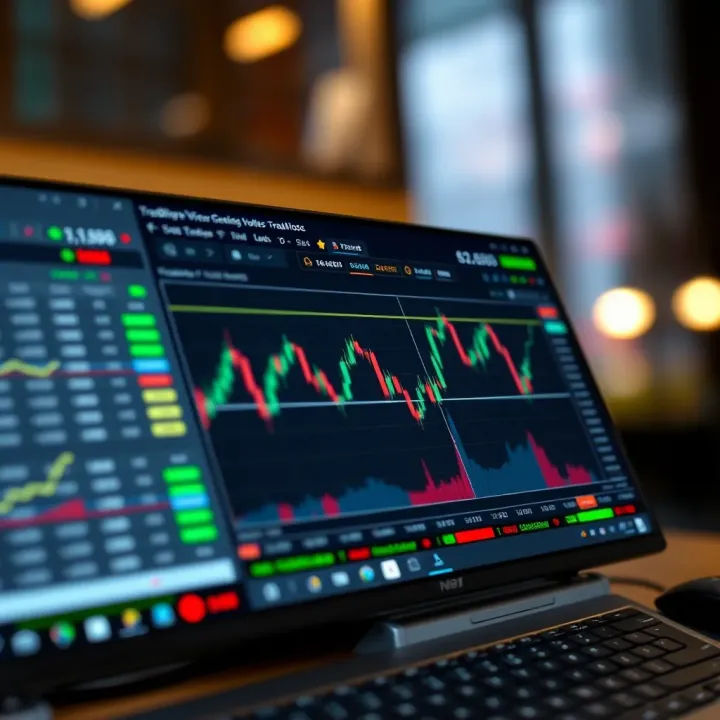
📈 Learn how to use TradingView.com charts with ease! Explore types, tools, indicators, and tips to sharpen your trading skills and make smarter moves.
Based on 14 reviews