

Practical Guide to Trading Websites for Nigerian Traders
Discover how Nigerian traders can pick the right trading websites, secure their funds 🔒, handle naira fluctuations ₦, and use local payment options like USSD effectively.
Edited By
Sophie Langley
BLUFX is one of the rising proprietary (prop) trading firms attracting attention among Nigerian traders looking to expand beyond personal capital. Unlike traditional brokerages where you trade your own funds, BLUFX offers access to firm capital, allowing you to trade larger positions while keeping a share of the profits.
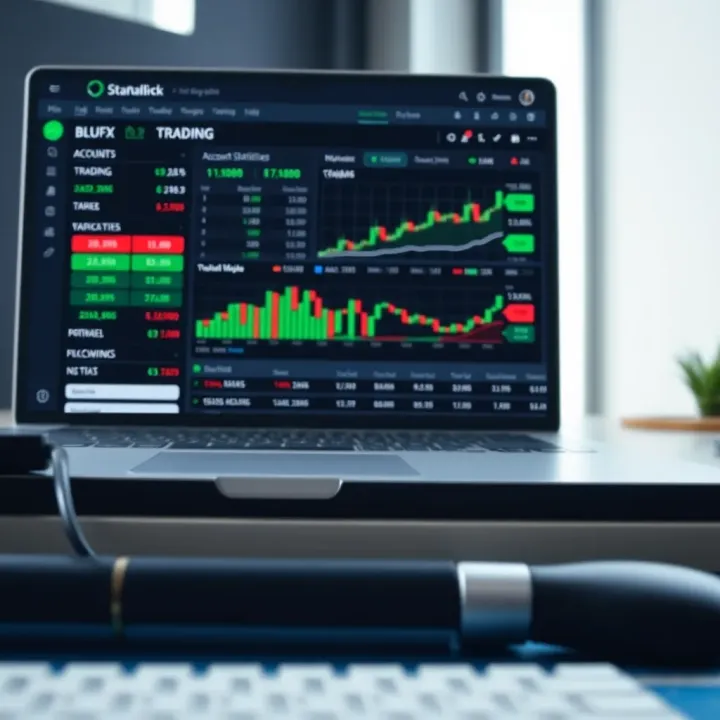
BLUFX provides funded accounts after passing their evaluation process. Traders usually start on a trial account where profit targets and risk rules are set. If you meet these targets within the time frame, BLUFX assigns a funded account with higher capital. You then trade live markets like forex, indices, or commodities using the firm's money.
Profit sharing: Traders keep a majority share of their profits, typically around 70%. This incentivises skilled traders to perform well.
Risk management rules: To protect the firm’s capital, BLUFX enforces daily loss limits and maximum drawdown limits. Breaking these rules could mean losing access to the funded account.
Account types: Different tiers offer various capital amounts and leverage options. For instance, starting accounts might offer ₦5 million equivalent in USD, scaling higher with proven performance.
Costs: There are evaluation fees which cover operational expenses during trial phases. These fees vary but usually range between $200–$500 (around ₦100,000–₦250,000).
Passing the evaluation requires discipline and solid trading strategies — it's not just about chopping the market recklessly.
Access to larger capital without upfront funding can fast-track your trading career. Local traders battling naira volatility and high generator costs find this setup useful since it reduces the capital requirement risks. Moreover, BLUFX’s streamlined evaluation and fast onboarding help reduce waiting times compared to some older prop firms.
To sum up, BLUFX is a viable option if you want to leverage firm capital with clear rules and shared rewards. However, understanding the evaluation process, risk limits, and fee structure upfront will save you time and money. In the following sections, you will find deeper insights into application steps, account management, and practical tips tailored for Nigerian traders navigating BLUFX's platform.
To grasp how BLUFX operates, you must first understand what a proprietary trading firm is. Such firms provide traders with company capital, allowing them to trade financial markets without risking their money. Profits generated are shared between the trader and the firm, while the trader manages risks following firm guidelines. This setup is especially appealing for Nigerian traders who lack sizeable personal funds but seek to engage actively in markets like forex or indices.
A proprietary (prop) trading firm hires or contracts traders to use its capital to trade assets such as currencies, stocks, or commodities. The firm benefits from traders’ profits without taking direct trading risks. Unlike retail trading where individuals use their funds, prop firms like BLUFX supply funds, and often provide access to better trading tools and leverage.
This model offers a win-win: the trader can scale strategies without substantial personal deposits, and the firm earns a cut from successful trades. For instance, a trader from Lagos might access $50,000 through BLUFX to trade forex pairs, applying their skill rather than their savings.
BLUFX allocates trading capital based on the trader’s performance during an evaluation phase. Instead of starting with personal funds, Nigerian traders undergo tests to prove their consistency. Upon passing, BLUFX assigns them a funded account with capital ranging from $10,000 up to $100,000 or more, depending on account tier.
This arrangement allows traders to take larger market positions without risking their savings. A practical example: a trader in Abuja passes the evaluation and receives $25,000; profits from trades then become a shared income between the trader and BLUFX under agreed terms.
BLUFX primarily supports forex pairs, including majors like EUR/USD and GBP/USD, alongside popular indices such as the US30 or UK100. Offering a focused selection keeps the trading environment straightforward but powerful. Nigerian traders familiar with forex on platforms like MTN FX or other brokers will find the instruments similar.
The choice of instruments affects strategy. For example, short-term scalpers might prefer volatile pairs, while swing traders may focus on indices. BLUFX’s set-up ensures traders trade within these supported instruments only, keeping risk manageable.
Trading with BLUFX happens through the MetaTrader 4 (MT4) platform—an industry standard known for reliability and usability. Traders can execute orders, manage positions, and analyse charts with functional tools accessible on desktops and mobile devices.
In Nigeria, where internet stability varies, MT4’s low bandwidth requirements are helpful. BLUFX also ensures real-time data feeds and execution speeds that meet global market demands. For Nigerian traders, this means smoother access compared to some local brokers, improving chances for timely market moves.
Understanding BLUFX’s prop trading model clarifies how Nigerian traders can access substantial capital and advanced tools without upfront large deposits, while navigating rules designed to protect both the firm and trader.
With this foundation, Nigerian traders can better evaluate if BLUFX’s offerings align with their trading goals and technical capabilities.
Joining BLUFX involves a structured process that ensures only skilled and disciplined traders gain access to the firm’s trading capital. Nigerian traders contemplating BLUFX should understand this process well, as it directly affects their chances of success and exposure to funding.

The journey starts with registration on the BLUFX platform. Traders need to provide basic personal details, including identity verification, to meet regulatory requirements. Next, applicants select their preferred evaluation challenge and trading account size, which aligns with their trading style and capital needs.
Once registered, traders pay the evaluation fee — a necessary step to access the simulated trading environment. This fee varies depending on the account size chosen. After funding the evaluation phase, traders download the proprietary BLUFX trading platform, which offers an intuitive interface with real-time market data across Forex, indices, and commodities.
Traders then embark on the evaluation challenge, which mimics live trading conditions but without risking real capital. Successful completion of this challenge opens the door to funded trading accounts with capital supplied by BLUFX.
BLUFX evaluation is a two-phase challenge. First, traders must meet profit targets within defined risk limits and timeframe. For example, a ₦5 million simulated account might require a 10% profit target while maintaining a strict maximum drawdown. Traders must demonstrate consistency, risk management, and adherence to the firm’s rules.
Passing this challenge proves the trader’s ability to manage real capital responsibly. It filters out impulsive or reckless trading behaviour that could jeopardise the firm’s funds.
Traders usually have up to 30 days to complete the evaluation. This period strikes a balance between giving enough time to trade strategically and ensuring quick progression for motivated traders. Metrics tracked include daily loss limits, maximum position size, and minimum trading days to discourage erratic strategies.
Meticulous record-keeping by the platform allows traders to monitor their progress and adjust tactics accordingly. Nigerian traders should be particularly mindful of market hours and local internet reliability during this phase to avoid missing key trading opportunities.
Successful completion of BLUFX’s evaluation increases your chances of accessing capital without upfront deposits, making it a practical stepping stone for Nigerian traders looking to scale their trading career.
Understanding the application and evaluation process equips you to move confidently from registration to live trading with BLUFX. It also highlights the discipline and commitment needed to thrive in prop trading.
Before stepping into proprietary trading with BLUFX, Nigerian traders need a clear grasp of how costs and profit sharing work. Understanding these elements helps avoid surprises and ensures traders manage their finances well while focusing on maximising returns. With trading firms like BLUFX, fees and profit arrangements directly affect your bottom line and trading strategy.
BLUFX requires traders to pay an evaluation fee before they begin trading with the firm's capital. This fee acts like a ticket to access the evaluation challenge, where traders prove their skills under real-market conditions. For example, a ₦100,000 fee might be required for a particular trading level. This cost is significant because it represents the trader’s initial investment before access to larger fund sizes. It’s vital to approach this fee as an upfront business cost, similar to a registration fee for a competition or a deposit that validates your seriousness.
The good thing is, this fee usually covers the cost of the account access and the trading challenge environment itself. So, consider it an entry checkpoint: if you pass, you unlock access to live funds; if you don’t, the fee is the price of experience and learning.
Some prop firms levy ongoing platform charges or monthly fees for maintaining access to trading software and services. BLUFX’s fee structure here varies depending on the account size and plan chosen. Nigerian traders should know that these charges might come in monthly or periodic bills around ₦10,000 to ₦30,000, depending on the service level.
Such fees cover platform maintenance, data feeds, and customer support. While these costs reduce net profits, they ensure uninterrupted access to technology and trade execution tools. Traders who prefer longer evaluation periods or trading at higher volumes must factor these into their overall profit calculations. Ignoring monthly fees could create surprises during withdrawals.
BLUFX offers a profit-sharing scheme where traders keep a major portion of their earnings. Typically, traders receive around 70% to 80% of the profits made on the funded account, with the firm taking the rest. This split motivates both parties: traders earn a good income without risking their own capital, while BLUFX recovers costs and sustains its business.
Withdrawal terms at BLUFX generally allow traders to cash out profits regularly after meeting minimum thresholds. For Nigerian traders, it’s important to check the withdrawal process carefully, considering exchange rates, local banking options, and payment gateways. Platforms usually support transfers via bank accounts or fintech services popular in Nigeria, but timing and fees may vary.
Knowing the full cost structure and profit division lets you trade with clear expectations. Budget your evaluation fees and recurring costs upfront, and monitor how profit splits impact your income. Managing these well can turn BLUFX from just a trading platform into a valuable opportunity for smart Nigerian traders.
By understanding these costs and terms clearly, Nigerian traders stand a better chance at sustainable, profitable prop trading with BLUFX.
Understanding the trading rules and risk management policies at BLUFX is vital for any trader looking to succeed with the firm. These guidelines are designed to protect both the trader and the firm's capital, ensuring sustainable trading and minimising losses. For Nigerian traders, sticking to these rules can mean the difference between steady profits and costly slips.
BLUFX operates strict risk limits to control exposure and prevent reckless trading decisions. One key parameter is the maximum drawdown: the highest permissible loss a trader can sustain before their account is reviewed or closed. For instance, if a trader has ₦10 million in allocated capital, BLUFX may set a maximum drawdown at 10%, meaning losses beyond ₦1 million are unacceptable.
This cap helps traders avoid wiping out their entire balance in a short burst. It forces discipline and risk awareness. Take a trader who enters a series of trades without stops and ends up with ₦1.5 million loss; BLUFX would flag this as a breach. Thus, a trader must monitor positions closely and use stops wisely.
Besides drawdown limits, daily loss caps can be imposed. Hitting these stops ends trading for the day, allowing the trader to reassess rather than chase losses. This approach benefits Nigerian traders who may face volatile markets and erratic internet connections, helping them to avoid piling losses when conditions are harsh.
BLUFX allows a variety of trading strategies but with clear restrictions to manage risk. For example, scalping—making multiple quick trades for small profits—is usually permitted, but traders must avoid strategies that expose the firm to overnight or weekend gaps.
High-frequency trading or the use of automated bots may have limits or require prior approval, ensuring fair play across all traders.
Importantly, BLUFX forbids insider trading, arbitrage on restricted assets, and any form of market manipulation. Nigerian traders should be especially cautious, as violating these rules can lead to immediate disqualification and loss of funding.
Moreover, some instrument-specific rules apply. For instance, trading volatile CFDs might require smaller position sizes compared to forex pairs like EUR/USD. Traders should familiarise themselves with these conditions to avoid surprises.
Maintaining discipline through strict adherence to BLUFX’s trading rules and risk limits is not just about compliance. It improves your chances of consistent profitability and helps you build a professional trading career.
In short, BLUFX’s approach to risk management protects capital and ensures that traders execute strategies responsibly. Nigerian traders who master these rules position themselves for long-term success on the platform.
Nigerian traders eyeing proprietary trading firms must weigh the benefits against local realities. BLUFX offers opportunities but also comes with some challenges that traders in Nigeria should consider carefully before committing. Understanding these factors helps determine if BLUFX fits your trading style, infrastructure, and financial goals.
One major plus of BLUFX for Nigerian traders is the ability to trade with significant capital without putting down large personal funds. Many Nigerian traders struggle to build enough capital due to economic constraints and fluctuating exchange rates. BLUFX provides funded accounts once you pass their evaluation, meaning you can trade with tens of thousands of dollars without risking your own ₦.
This model lowers the barrier to entry remarkably. For example, rather than needing ₦5 million to trade meaningfully on other platforms, passing BLUFX’s tests lets you manage that level or more via their capital. It’s a practical way to scale up your trading career without waiting to save or securing loans.
BLUFX also offers educational materials and a community of traders, which can be useful for Nigerians looking to sharpen their skills. The learning resources cover risk management, platform navigation, and advanced trading techniques. While not extensive as standalone courses, they serve as helpful guides to pass evaluations and become efficient traders.
Community channels connect you to other traders worldwide, exposing you to diverse strategies and feedback. For Nigerian traders in smaller towns where direct mentorship is scarce, these support networks can substitute for real-time coaching and inspiration.
A key challenge is Nigeria’s inconsistent internet infrastructure. BLUFX’s trading platform demands stable and relatively fast internet to handle real-time pricing and execution. Traders in areas with frequent power outages or low bandwidth might experience delays or disconnections, which risk missing critical trades.
This issue means you may need to invest in reliable internet solutions or backup power systems, adding to your overhead. Without these, your trading performance could suffer, especially during volatile market periods.
BLUFX operates primarily in US dollars, creating currency conversion hurdles for Nigerian traders. With the naira’s volatility against the dollar, profits withdrawn from BLUFX may shrink or become unpredictable, depending on exchange rates.
Moreover, withdrawal processes may involve limited payment methods, sometimes requiring third-party platforms whose fees and processing times vary. This can delay your access to funds or reduce your take-home amount. Understanding how to smoothly convert and remit earnings into naira is crucial before trading seriously with BLUFX.
Nigerian traders benefit from BLUFX’s capital access and learning support but must prepare for local internet and currency challenges that could affect trading success.
Overall, BLUFX can suit Nigerian traders who are ready to handle these challenges and leverage its resources wisely.
Discover how Nigerian traders can pick the right trading websites, secure their funds 🔒, handle naira fluctuations ₦, and use local payment options like USSD effectively.

📈 Discover how free prop firm challenges offer Nigerian traders a risk-free way to access trading capital. Learn key tips to succeed and avoid the common pitfalls. 💹
Explore TradingView with this guide tailored for Nigerian traders 🇳🇬. Learn charting, indicators, global connections, and smart tips to navigate the platform!
📊 Learn how synthetic trading helps Nigerian investors mimic asset moves using derivatives, manage risks, and diversify portfolios beyond traditional methods. ₦-wise, smart moves for smarter returns.
Based on 8 reviews