
How to Use TradingView for Binary Options Trading
📈 Master binary options trading with TradingView.com! Learn tool tips, chart setups, indicators, broker integration & risk tactics all in one place.
Edited By
Laura Mitchell
TradingView has become a staple platform for traders in Nigeria, especially those active in binary options trading. Its strength lies in detailed charting tools and real-time data which allow traders to monitor market moves closely. While binary options trading can appear straightforward—betting on price direction within a fixed timeframe—using TradingView properly adds a layer of analysis that helps you make smarter calls.
Setting up TradingView for binary options is different from traditional forex or stock trading because you focus on shorter timeframes and specific price targets. For example, traders often rely on 1-minute or 5-minute candlestick charts to catch quick movements. By adjusting chart settings to these brief periods, you increase your chances of spotting timely entry and exit points suitable for binary contracts.
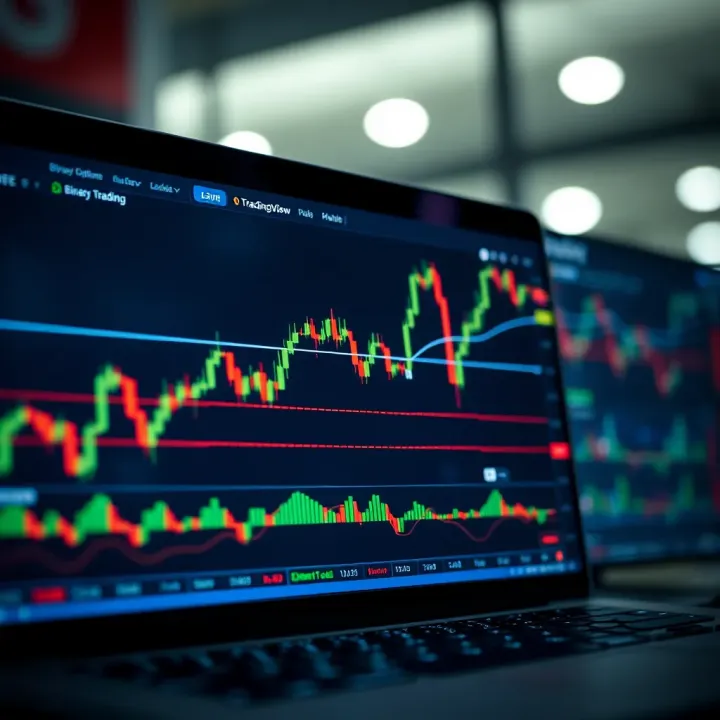
Several technical indicators on TradingView work well with binary options, like the Relative Strength Index (RSI) and Moving Average Convergence Divergence (MACD). RSI can help identify overbought or oversold conditions, signalling potential price reversals, while MACD highlights momentum shifts. Nigerian traders find combining these two indicators useful for quick decisions during volatile sessions, such as when NGN pairs react sharply to CBN announcements or global oil price changes.
Remember, no indicator guarantees success. Use them to support your trading ideas, not as sole decision-makers.
Risk management is vital given binary options’ all-or-nothing nature. TradingView assists by letting you backtest strategies visually before putting real money on the line. Even a well-planned setup on TradingView should be paired with strict capital limits and a disciplined approach to avoid losing ₦ unnecessarily.
Despite TradingView’s benefits, its limitations in binary options include delayed broker execution times and the platform’s inability to handle binary trades directly. Traders must therefore use it alongside a reliable Nigerian or international broker to place trades swiftly.
To get the best out of TradingView in Nigeria’s market, tailor your charts to shorter intervals, combine key indicators like RSI and MACD, and always keep an eye on major economic events impacting the naira. This approach ensures you’re not just guessing, but making informed choices that improve your chances of profit on binary options trades.
Getting to grips with both TradingView and binary options trading is fundamental if you want to trade smartly in Nigeria’s fast-moving markets. This section breaks down each concept and highlights why their intersection can boost your trading edge.
TradingView is a web-based platform offering detailed charts and technical analysis tools. Nigerian traders rely on it for clear, real-time visualisation of price movements across various assets like Forex, stocks, commodities, and cryptocurrencies. Its user-friendly interface allows traders to customise charts, apply technical indicators, and share trade ideas in its active community. For example, a Lagos-based trader might use TradingView charts to track USD/NGN currency trends before placing trades.
Binary options are simple contract trades where you predict whether an asset’s price will rise or fall within a set time. One key appeal for Nigerian traders is the fixed risk-reward ratio; you either win a preset payout or lose your initial stake. But success depends on timing and sharp analysis. Unlike regular trading where you hold assets, binary options are more like short-term bets tied heavily to price direction.
TradingView arms you with clear, in-depth data crucial for binary options. Its rich charting features let you spot entry and exit points easily by observing price patterns, support and resistance levels, and combining indicators such as Moving Averages or the Relative Strength Index (RSI). For instance, spotting a resistance level before expiry could inform a 'put' option.
Also, TradingView’s alert system helps you track market moves without staring at your screen all day, allowing busy traders in Abuja or Port Harcourt to react quickly. The community scripts offer fresh strategies which can serve as trading plan ideas. Plus, unlike some broker charts that lag or lack tools, TradingView offers reliable, detailed visuals essential for Nigerian binary options markets that deal with naira volatility and local timings.
Using TradingView effectively means you are not trading blind; you understand the movements better, increasing your chances to make informed binary option trades worth your hard-earned ₦.
This introduction lays the foundation for learning how to set up TradingView and use its features step-by-step for Nigerian binary options traders.
Setting up TradingView correctly is vital for binary options traders in Nigeria. The platform’s flexibility allows you to tailor charts, timeframes, and tools to match the fast-paced nature of binary trading. Investing some time in configuring these features helps you quickly spot market movements and act decisively.
Binary options trading demands clarity because the trades often last minutes or hours. Customising your charts means simplifying the view while focusing on key price actions. For example, Nigerian traders often prefer candlestick charts due to the clear price pattern they show. Adjusting colours for bullish and bearish candles helps spot trends fast – green for rises and red for falls are common choices.
You should remove unnecessary chart elements like volume bars or indicators unrelated to your strategy to reduce clutter. Using clean charts ensures your eyes don’t get tired navigating irrelevant information, especially during shorter expiry trades. Also, organising chart layouts enables you to compare multiple assets side-by-side, a big advantage when tracking forex pairs like USD/NGN or commodities.
Since binary options have fixed expiry times, picking the right timeframe is key. Most traders focus on short timeframes—like 1-minute, 5-minute, or 15-minute charts—because price changes over these periods dictate entry and exit points.
For example, if you’re trading a 15-minute binary option on crude oil, watching 5-minute charts offers a good balance. It gives enough price detail without getting overwhelmed by noise, helping you make timely decisions. On the other hand, daily or hourly charts suit traders who take longer-term binary positions, like 1-hour expiry options.
Adjusting the timeframe according to the binary option’s expiry setting makes your analysis sharper and reduces guesswork.
Drawing tools on TradingView play a big role in setting up for binary trading. Lines, horizontal support and resistance zones, and trendlines are your basic arsenal.
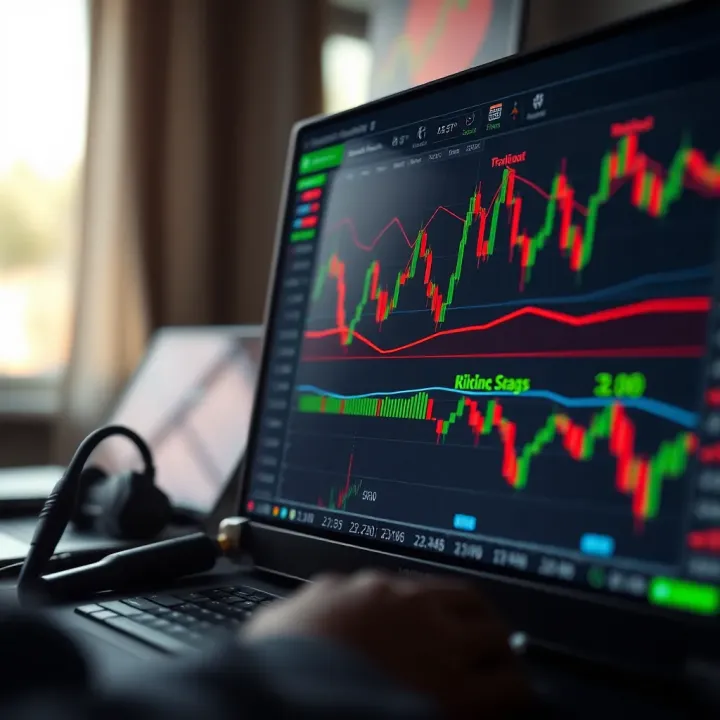
Identify recent highs and lows by drawing horizontal lines where price repeatedly reversed; these levels often act as barriers. For Nigerian traders watching forex pairs or commodity prices, these levels provide valuable signals for ‘call’ or ‘put’ options. For instance, if USD/NGN encounters a strong resistance at ₦460, a trader might consider a put option near that point.
Trendlines help track momentum. An upward sloping trendline drawn connecting successive lows can guide you on when to enter a call option during a pullback. TradingView also offers tools like Fibonacci retracement that help gauge price corrections, improving entry accuracy.
Setting up your charts well saves precious seconds during trades, and in binary options, seconds can mean ₦ gains or losses.
In summary, customising charts for simplicity, picking timeframes matching your expiry, and marking key levels with drawing tools set a strong foundation. These steps help depict a clear price picture to guide confident binary options trading in Nigeria’s markets.
Technical analysis plays a significant role in binary options trading, especially when using TradingView. By examining price charts and indicators, traders can identify potential market trends and make informed predictions about short-term asset movements. Since binary options rely on correctly guessing price direction within a fixed expiry, understanding technical analysis tools on TradingView sharpens your edge in entering and exiting trades at the right moment.
Moving averages smooth out price data by calculating the average price over a set period, helping traders spot trends and filter out market noise. In binary options trading, the 20-period and 50-period simple moving averages (SMA) are commonly used on TradingView charts to determine short- and medium-term trends. For example, if the 20 SMA crosses above the 50 SMA, this crossover often signals upward momentum—a cue to consider a 'call' option.
Using moving averages also helps define dynamic support and resistance levels. When price approaches a moving average and bounces off, it adds confirmation to trade decisions. In Nigeria's active markets, where volatility can spike around news, moving averages help smooth sudden price swings without ignoring the bigger picture.
RSI measures the speed and change of price movements, ranging from 0 to 100, to identify overbought or oversold conditions. On TradingView, RSI is valuable for spotting entry points in binary options. An RSI above 70 suggests the asset may be overbought and due for a price drop — ideal for a 'put' option. Conversely, RSI below 30 indicates oversold conditions, pointing to a potential price rebound.
In the Nigerian market context, RSI can warn traders against chasing trends when the price has already run too far. For instance, during ember months, when market activity is high, RSI alerts can prevent costly late entries.
Bollinger Bands consist of a moving average line with upper and lower bands set at a fixed number of standard deviations, measuring price volatility. When the bands contract, it signals low volatility and often precedes sharp price movements. When the price touches or moves outside the bands, it usually indicates overextension.
For binary options, Bollinger Bands on TradingView help traders decide when to enter trades by alerting them to periods of consolidation or breakout. A price breaking above the upper band might set up a 'call' option, but a reversal shortly after touching the band could mean a quick 'put.' Knowing when volatility increases helps you avoid false signals and reduces exposure.
Relying on a single indicator can sometimes mislead because no signal is 100% accurate. Combining tools like moving averages with RSI or Bollinger Bands often gives stronger confirmation. For example, if the 20 SMA crosses above the 50 SMA while the RSI moves from oversold levels upward, these signals together improve the chance that a price rise will continue.
On TradingView, layering indicators helps you spot when different technical perspectives align. This reduces guesswork, allowing you to place binary options trades based on multiple data points rather than one isolated signal.
Support and resistance levels represent price points where buying or selling pressures repeatedly cause a reversal or pause in an asset’s movement. Identifying these levels on TradingView charts is vital for binary options trading. If price approaches a strong support zone, anticipating a bounce might warrant a 'call' option. Similarly, nearing resistance may suggest placing a 'put' option expecting the price to fall back.
Drawing horizontal lines and using previous highs and lows on TradingView lets you mark these crucial zones clearly. Nigerian markets sometimes experience sudden announcements that push prices near these levels. Knowing where support and resistance lie can help prevent entering trades that go against strong market barriers.
Understanding and effectively applying these technical analysis techniques on TradingView helps Nigerian binary options traders reduce risks and improve timing in a fast-paced market.
Trading binary options demands more than just luck; solid strategies based on reliable data can make the difference between consistent gains and frequent losses. Using TradingView effectively helps you spot the right moments to enter or exit trades, monitor market movements closely, and manage risks wisely. In Nigeria’s volatile markets—with currency fluctuations and unexpected news events—these strategies become especially relevant.
Entry and exit points define when you open or close a binary option trade. Using TradingView's detailed charts, you can pinpoint these moments through technical cues like candlestick patterns, moving averages, or RSI levels. For example, if the RSI drops below 30, it typically signals an oversold market, suggesting a potential 'call' option opportunity. Conversely, a reading above 70 might indicate an overbought condition, implying a good time to place a 'put' option.
Combining such signals with support and resistance levels improves accuracy. If the price approaches a strong support zone on the chart and the indicators confirm an upward move, it’s often a strong entry signal. Nigerian traders using these signals enjoy better timing, reducing the guesswork common in binary trading.
TradingView’s alert feature is a practical tool to stay on top of market changes, especially when you cannot watch the screen all day. You can set alerts for specific price levels, indicator thresholds, or chart patterns. For example, setting an alert for when a currency pair crosses a moving average lets you react quickly if the market starts trending, enabling timely trades.
In Nigeria, where power outages or network disruptions can interrupt trading, alerts on mobile devices ensure traders don’t miss key movements. This real-time monitoring prevents emotional, last-minute decisions and helps maintain discipline.
Risk management remains crucial, particularly in binary options where outcomes are all or nothing. Chart analysis on TradingView provides clear visual clues for risk control. For instance, recognising consolidation zones or indicators signalling trend weakening can stop you from entering risky trades.
Traders should also observe volatility patterns—the width of Bollinger Bands, for example, alerts you to changing market conditions. In high volatility (wide bands), it’s wise to play conservatively, as price swings can be unpredictable. Conversely, narrow bands suggest steadier markets, allowing more confident placements.
To sum up, integrating TradingView’s data into your binary options strategy equips you with clearer decision points and better risk awareness, vital for navigating Nigeria’s financial markets confidently.
While TradingView offers powerful tools, Nigerian traders using it for binary options should be aware of certain limitations that can affect their decision-making and outcomes.
One key challenge is the issue of data delays. TradingView relies on third-party data providers, and the speed of updates depends largely on the asset’s market and exchange connections. For example, forex pairs and commodities might update faster than some Nigerian stocks or local indices. These delays, sometimes lasting a few seconds, can be critical in binary options where trades often expire within minutes—or even seconds. A trader acting on slightly outdated signals could enter or exit at suboptimal times, impacting profitability.
Moreover, the free version of TradingView usually has more delayed data compared to the paid subscriptions. Nigerian traders need to weigh the cost versus benefit, particularly if their binary options broker doesn’t sync perfectly with TradingView’s data feed. This mismatch can cause confusion, making timely decisions harder.
Another challenge relates to how well TradingView works alongside binary options brokers operating in Nigeria. Most brokers have their own proprietary platforms with built-in charts and indicators. Integrating TradingView with these platforms is often not seamless. For example, unlike Forex or stock trading, binary options platforms rarely support direct automation or trade execution from TradingView’s charts.
This disconnect means traders must manually transfer insights from TradingView to their broker’s platform, risking delay and errors. Also, some Nigerian binary options brokers might not accept signals or alerts from external platforms due to regulatory or technical reasons. Traders should verify if their chosen broker supports or encourages using TradingView to avoid wasted effort.
Nigeria’s financial markets—like the NGX or forex pairs involving the naira—have distinct volatility patterns influenced by factors such as government policy changes, fuel subsidy reviews, and election cycles. Unlike more mature markets, these can be abrupt and severe.
TradingView’s technical indicators may not fully capture this market behaviour since their algorithms rely on historical price patterns. For instance, a sudden naira devaluation or fuel scarcity can cause price spikes that break usual support and resistance levels. Relying solely on charts without local context may mislead traders.
Nigerian traders should combine TradingView’s signals with awareness of local economic news and events. Understanding these volatility drivers is vital for managing risk effectively, especially in short-term binary options.
In practice, traders might adjust their expiry times or position sizes around high-impact events known to cause wild price swings in Nigerian markets. This combined approach improves chances of trading success despite TradingView’s inherent limitations.
In summary, while TradingView is a valuable charting platform, Nigerian binary options traders must navigate data delays, platform compatibility, and local market quirks carefully. Being aware of these challenges and preparing for them creates a more realistic and profitable trading strategy.
To get the best out of TradingView for binary options trading in Nigeria, you need practical steps that align with the platform's tools and Nigeria's market realities. These tips focus on boosting efficiency, accuracy, and responsiveness to price moves that matter for short-term binary trades.
TradingView hosts a thriving community of traders who publish custom scripts and share trading ideas daily. Nigerian traders can tap into these community contributions to discover new indicators or strategy tweaks that suit binary options. For example, a trader might find a custom RSI variant or a volatility filter tailored for short expiry trades. Before applying these scripts, check the author's credibility and backtest the tool on your chosen asset and timeframe. Popular Nigerian traders often publish strategies specific to forex and commodities popular locally, which can give you an edge if you trade assets like USD/NGN pair or crude oil.
TradingView’s charts are powerful, but the real edge comes from syncing analysis with brokers active in Nigeria. Some brokers supporting binary options may not have full API links to TradingView, but you can manually use analysis from TradingView to guide trades on platforms like Pocket Option or Binomo. Additionally, monitoring price action on TradingView while executing on brokers offering Nigerian payment options like Paystack or Flutterwave smoothens your trading experience. To reduce delays, keep a clean dashboard on both TradingView and the local platform. Using real-time alerts on TradingView helps you avoid constantly staring at charts while preparing to place trades promptly when signals appear.
TradingView’s integrated news feed can keep you informed of economic events and geopolitical updates that impact binary markets. Pay special attention to announcements from the Central Bank of Nigeria (CBN) or data releases such as inflation numbers. These often trigger volatility spikes that can affect short-term trades. For instance, a surprise CBN policy rate change can cause rapid price swings on the NGX or forex pairs, creating opportunities or risks. Set up alerts for specific news tags like 'Forex', 'Oil', or 'Equities' in TradingView’s news panel. Beyond this, cross-check with local sources such as Nairametrics or BusinessDay. This balanced approach ensures your binary trading stays rooted in both technical signals and market-moving news.
Taking these steps helps Nigerian traders use TradingView more effectively, turning the platform into a practical tool for real-time decision-making and risk management, rather than just a charting service.
Following these tips decisively reduces guesswork, sharpens your timing, and improves trade outcomes in the fast-paced world of binary options trading in Nigeria.
📈 Master binary options trading with TradingView.com! Learn tool tips, chart setups, indicators, broker integration & risk tactics all in one place.
Learn how to integrate TradingView charts with binary options platforms 🔄 Enhance your trading strategies with clear steps & tips, tailored for Nigerian traders 🇳🇬
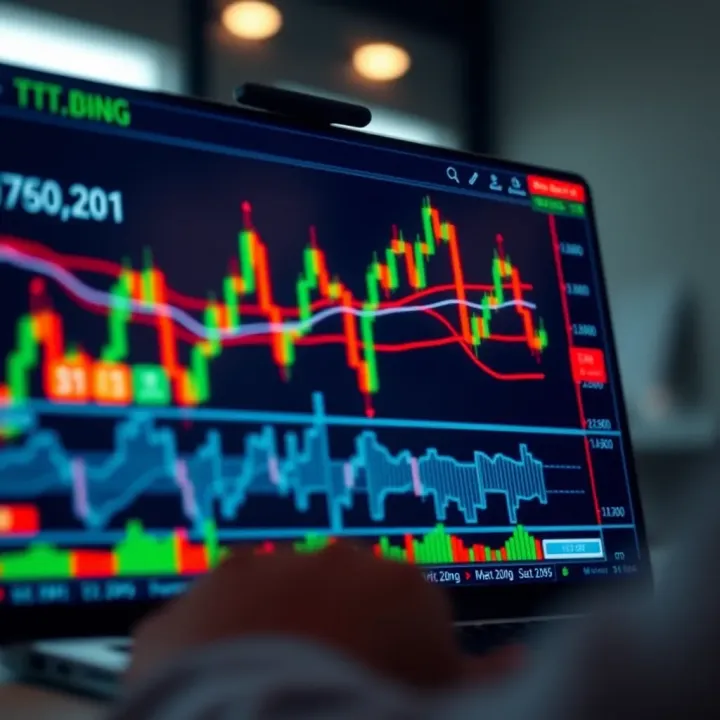
📈 Discover how TradingView boosts binary options trading in Nigeria 🇳🇬. Get practical tips, spot risks, and trade smarter with insights tailored for Nigerian investors.
Explore how binary options trading works in Nigeria 🇳🇬, learn key strategies, legal tips, and risks to trade smartly and stay secure in the market. 💹
Based on 11 reviews