
Maximize Trading Insights with TradingView Charts
📈 Master TradingView charts to boost your trading skills. Learn chart types, indicators, tools & tips for smarter decisions in Nigeria's financial markets.
Edited By
James Hamilton
Volatility trading is all about finding opportunities in the ups and downs of price movements. Unlike traditional investing, which often focuses on the direction of a market's trend, volatility trading pays attention to how much prices swing, regardless of whether they go up or down.
In Nigeria and across global markets, understanding volatility can help traders and investors spot profit chances and manage risks more effectively. This is especially true in markets like the Nigerian Stock Exchange, where price shifts can be surprisingly sharp due to local economic news or political events.
In this article, we'll break down what volatility really means, how it’s measured, common tools traders use, and the strategies that can make the most of market fluctuations. Plus, we’ll touch on ways to manage risk, which is key in a game where prices can change quickly.
By the end, you should have a solid grasp of how to trade volatility smartly, whether you’re working with shares, options, futures, or other instruments, and how that knowledge fits in the local and global market picture.
Volatility isn't just noise; it's where opportunity hides if you know how to listen.
Volatility trading refers to the practice of profiting from the fluctuations in market prices rather than betting on a stock or asset moving up or down. Instead of focusing on the direction of price, volatility traders zero in on how much prices shift. This approach can offer unique ways to hedge risks or capitalize on market jitters, especially when traditional directional bets feel uncertain.
Take the Nigerian stock market, for example. Sometimes, stocks like Dangote Cement or MTN Nigeria might not move much in price, but the swings within the trading day can be unpredictable. Volatility traders look to exploit these ups and downs for gains, independent of whether prices end higher or lower.
Understanding what volatility trading involves helps traders grasp why it matters. It often suits those who want to broaden their toolkit beyond 'buy low, sell high' strategies to capture opportunities during choppy or sideways markets.
Volatility is essentially a statistical measurement of the variation in an asset's price over time. One common way to measure it is through the standard deviation or variance of returns, which captures how much prices stray from their average. In practical terms, a stock with high volatility might see daily swings of 3-5%, while a low-volatility stock may move less than 1% on a typical day.
For traders, tools like the CBOE Volatility Index (VIX) give a live pulse on expected market volatility based on options prices. In Nigeria, while there isn’t a direct equivalent of the VIX, looking at historical price charts and daily ranges for popular stocks can give a rough gauge.
Traders use these measurements to plan entries and exits. For instance, if a stock normally moves 1% a day but suddenly starts jumping 4-5%, that signals changing market dynamics and possibly more trading opportunities.
Price fluctuations impact more than just the account balance; they influence the way trades are executed and risk is managed. For example, sudden, sharp moves—like what some call "price shocks"—can trigger stop-loss orders or cause slippage where trades fill at worse prices.
In markets like Nigeria’s, where liquidity may be thinner compared to global exchanges, these fluctuations can be amplified. A relatively small news event or economic data release might provoke outsized price jumps.
Understanding these implications means traders stay alert to market behaviors that might cause unexpected losses or gains, and adjust their tactics. For instance, during volatile news periods, traders may scale back position sizes to reduce overall exposure.
Volatility offers chances to profit regardless of whether the market is going up or down. For example, if a stock is expected to swing wildly after an earnings report, traders might buy both call and put options (a straddle strategy) to benefit from the move in either direction.
In Nigeria, events like changes in oil prices or political developments often trigger volatility spikes. Traders who recognize these patterns can plan positions that benefit from increased price fluctuations rather than directional bets alone.
Moreover, volatility trading can provide income generation plus portfolio diversification, especially during times when markets are uncertain or less predictable.
The main difference between volatility trading and directional trading lies in the bet’s focus. Directional trading is all about guessing whether an asset's price will rise or fall. For example, buying shares of Zenith Bank expecting a price increase is directional.
Volatility trading, however, bets on how much prices swing, not which way they go. Sometimes, the market barely moves overall, but prices bounce back and forth a lot. This opens up a playground for strategies like strangles or butterfly spreads.
Choosing volatility trading can reduce exposure to the risk of being wrong about price direction, but it introduces other risks like timing the changes in market swings correctly. Hence, it suits traders comfortable with these dynamics and good at reading volatility signals.
Understanding volatility and the different ways to approach it broadens a trader’s perspective and offers tools for navigating markets that don’t always follow clear trends.
By appreciating these parts of volatility trading, traders can better decide when and how to use these tactics in both Nigerian markets and beyond.
Knowing the right tools to trade volatility is a game-changer for anyone serious about profiting from market swings. It’s not just about guessing the market direction but understanding how much the market moves, which instruments can best capture this, and how to use them effectively.
Traders often turn to specific financial products designed to express or exploit volatility. These instruments give insight into market sentiment and offer ways to position for turbulent or calm periods. In the Nigerian market—and globally—these tools range from straightforward options contracts to more complex products like volatility indexes and exchange-traded funds (ETFs).
Let’s break down some of the key instruments you’ll want to understand if you're looking to navigate volatility trading.
Options are a popular way to trade volatility because they offer flexible payoffs depending on how much and how quickly prices move. A call option gives the holder the right (but not the obligation) to buy an asset at a fixed price within a certain time, while a put option allows selling at a set price in the same timeframe.
In Nigeria, options trading is still developing, but internationally, these contracts are widely used to hedge or speculate on stocks, commodities, or currencies. For example, if you expect sharp price swings in an oil stock like Oando or a currency pair involving the Naira, buying calls or puts can help capture profit potentials without owning the underlying asset.
What makes options valuable for volatility isn’t just the direction, but how big the moves can be. Higher expected swings usually inflate option prices, making them costlier but also offering higher potential rewards.
Options pricing includes several factors, but volatility takes center stage. Specifically, implied volatility estimates how much the market expects the underlying asset’s price to move over the life of the option. The higher the implied volatility, the more expensive the option.
This implied volatility is crucial because it reveals market expectations. When implied volatility spikes, it typically signals upcoming uncertainty or a potential event that might shake markets. Traders tracking options prices—on stocks or currencies relevant to the Nigerian market—can use these signals to time their trades or adjust portfolios.
For example, just before Nigeria's elections, implied volatility on financial stocks might rise anticipating market jitters. An option trader sensing this could use the increased premiums to sell options or set up spreads that benefit from falling volatility after the event.
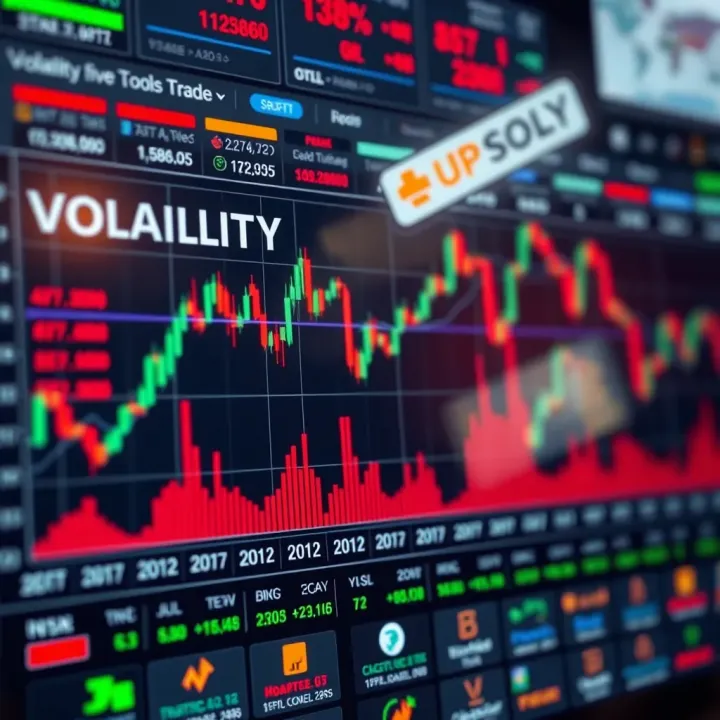
The CBOE’s Volatility Index, or VIX, is often called the "fear gauge" of the market because it measures expected S&P 500 volatility over the next 30 days. While VIX itself isn’t directly tradeable, there are futures and ETFs linked to it that let traders speculate on market volatility.
Though the Nigerian Stock Exchange doesn’t offer a local VIX equivalent yet, understanding VIX helps traders grasp global market moods and influences. Movements in the VIX can hint at volatility trends that ripple into emerging markets like Nigeria, affecting strategies.
Related products, such as VXX or UVXY ETFs in the US, provide exposure to volatility futures. These instruments allow traders to profit from volatility spikes or hedge against market downturns without directly trading options.
Ease of Access: ETFs are easy to buy and sell like stocks, giving traders a simple way to trade volatility without complex options strategies.
Diversification: Some volatility ETFs hold futures across various timeframes, smoothing out extreme jumps and offering a diversified volatility exposure.
Contango Risks: Many volatility ETFs suffer when futures markets are in contango (future prices above spot), leading to performance drags over time.
Short-Term Focus: Volatility ETFs are often better suited for short-term trading; holding them long term can be costly due to daily rolls.
For a Nigerian trader, these ETFs might be accessible via international brokerage accounts. However, understanding their mechanics is vital to avoid surprises, especially in how these products behave during calm versus turbulent times.
Smart volatility trading doesn’t come from guessing prices but from knowing which instruments best capture market swings and how to use them without getting caught off guard.
In summary, mastering options and learning how volatility indexes and ETFs function can open doors to more nuanced trading strategies. These tools, when used wisely, help navigate the ups and downs typical of both Nigerian and global markets.
Volatility trading isn't just about guessing whether prices will go up or down; it's about understanding how much prices move, regardless of direction. Knowing the common strategies used in volatility trading helps investors and traders make smart moves based on market fluctuations rather than just trends. These strategies are vital because they provide ways to profit even when the market isn’t trending strongly, which is often the case in Nigeria’s somewhat less liquid markets.
Options spreads are a core part of volatility trading. They let you balance risk and reward by combining multiple option contracts. This approach reduces the cost and limits your exposure compared to outright buying or selling options.
Straddles and strangles are popular when you expect the market to swing big but don’t know in which direction. A straddle involves buying a call and a put with the same strike price and expiration date. Meanwhile, a strangle is similar but uses different strike prices — typically, the call is bought at a higher strike, and the put at a lower one.
For example, if Nigerian stock NNPC Plc is about to announce quarterly results, an investor might buy a straddle to profit if the price jumps or drops sharply afterwards. The beauty is that you don’t need to predict direction, just a move.
These spreads are practical for volatile events but can lose money if the price stays flat because both options could expire worthless.
Butterfly and condor spreads are more refined strategies aiming to profit from lower volatility or modest moves. A butterfly spread usually involves buying and selling options at three strike prices, creating a position that benefits if the underlying price stays near the middle strike at expiration.
For instance, a trader might place a butterfly spread on Dangote Cement shares expecting low volatility over the next few weeks. This limits risk but caps maximum profit.
A condor spread is an extension with four strike prices, broadening the range where you can profit. It’s like a butterfly but with a wider 'safe zone' where you expect the price to stay.
Both spreads are excellent when traders forecast mild price changes and want to avoid large losses from sudden swings.
Volatility arbitrage takes a different tack: it looks for pricing inefficiencies between options and expected market moves.
Sometimes option prices don’t fully reflect the true market volatility. Traders who spot these mispricings can buy undervalued options or sell overpriced ones to capitalize when the market corrects itself.
An example might be during periods of low liquidity on the Nigerian Stock Exchange when options on companies like MTN Nigeria might temporarily undervalue volatility. Savvy traders can exploit those gaps.
This approach demands keen observation, understanding of implied vs. real volatility, and quick execution.
Pairing involves combining different volatility instruments to hedge or amplify a position. For example, pairing an option spread with a volatility ETF or a futures contract can balance risk.
Imagine a trader taking a volatility position on the VIX (Volatility Index) through an ETF while also trading options on Nigerian equities. If volatility spikes, gains from one can offset losses from the other, smoothing the portfolio’s performance.
This method is more advanced but offers flexibility, especially in choppy markets where traditional directional bets might not work well.
Successful volatility trading depends not just on strategies but also on understanding when and where to apply them. Knowing these strategies equips traders with tools to navigate uncertain markets and manage risk effectively.
By mastering options spreads and volatility arbitrage, traders can handle different market conditions better. The Nigerian markets, with their unique quirks and occasional volatility bursts, offer fertile ground to apply these strategies in real-time. Keep in mind that all trading involves risk; blending these approaches with strong risk management is key to long-term success.
Volatility trading comes with a unique set of risks that every trader should understand before diving in. While the ups and downs of price movements can create opportunities, they can also lead to significant losses if not managed well. This chapter sheds light on the critical risks involved and how they impact trading decisions. By recognizing these pitfalls early on, traders can prepare strategies to avoid getting caught flat-footed when markets behave unexpectedly.
Unexpected price gaps happen when an asset’s price jumps sharply from one level to another with no trading activity in between, often seen at market open or after major news events. For instance, a Nigerian stock might close at ₦100 and open the next day at ₦110 due to sudden positive earnings reports or regulatory changes. These gaps can seriously disrupt volatility trading since they bypass stop-loss orders and lead to larger-than-expected losses or gains. Traders should be aware of key events that might trigger such gaps, like central bank decisions or political unrest, and avoid excessive exposure right before these moments.
Volatility spikes represent sudden jumps in price fluctuations, often caused by unexpected news or macroeconomic changes. These spikes mean that the usual daily swings become much more pronounced, catching many traders off guard. For example, during the 2023 naira depreciation scare, Nigerian currency traders saw volatility soar overnight, impacting forex options and futures markets dramatically. Such spikes can blow up unhedged positions quickly but can also offer short-lived profit chances if you act fast and with clear rules. Understanding when volatility is likely to spike – around earnings reports, geopolitical tensions, or large economic data releases – helps traders position themselves better.
One of the simplest yet most powerful ways to manage risk is through position sizing, which means deciding how much capital to put into any one trade. In volatility trading, where price swings can be wild, putting too much capital on one bet is a quick road to major losses. A good rule is to risk only a small percentage of your total trading fund on each trade – often 1-2%. For example, with a ₦500,000 trading account, you might keep your risk around ₦5,000 or ₦10,000 per position. This approach prevents one bad trade from wiping you out and helps keep your emotions in check.
Stops and hedges are tools that act as safety nets in volatile markets. A stop order automatically sells your position once it hits a certain price, limiting losses. However, in markets prone to gaps, stops might not always prevent big losses—they help, but aren’t foolproof. Hence, many traders combine stops with hedges like buying options or opening opposite positions to offset potential losses. For instance, if you hold shares in a volatile Nigerian stock, purchasing put options can protect the downside. Using these tools smartly helps smooth out the rollercoaster ride of volatility trading.
Effective risk management isn’t about avoiding risk altogether but learning how to dance with market swings without getting trampled.
Recognizing these risks and planning accordingly is vital — from preparing for price gaps and volatility spikes to sizing your trades properly and using stops and hedges. These steps help traders stay in the game even when markets throw them curveballs.
Trading volatility in the Nigerian market means understanding how local factors shape price swings and what tools are available to tap into these moves. Unlike developed markets where volatility products and information flow freely, Nigeria has its own quirks. If you want to trade volatility here, knowing the local instruments, challenges, and regulations becomes critical. This section breaks down practical ways traders can adapt global volatility concepts to fit Nigeria’s market environment.
The Nigerian Stock Exchange (NSE) provides several stocks with decent liquidity like Dangote Cement, Guaranty Trust Bank, and MTN Nigeria. These offers are where traders can spot volatility through price movements. On the derivatives front, the market is still developing. The NSE has started allowing index futures and options trading, but the volumes are low compared to markets like the US. Traders here often work with single stocks rather than baskets or complex derivatives.
Local traders should focus on stocks with high trading volumes because they show more predictable volatility patterns. For example, MTN Nigeria often experiences noticeable price swings during earnings releases or regulatory news.
The Nigerian Naira (NGN) is one of the more volatile currencies globally, partly due to fluctuating oil prices and foreign exchange policies. This creates opportunities for traders who understand how currency volatility can impact stocks or commodities.
Retail and institutional traders can profit from NGN swings by using forex pairs (like USD/NGN available through certain brokers) or by trading equities of export-driven companies that move in response to currency shifts. Keep an eye on Central Bank of Nigeria announcements — these often trigger sudden jumps or corrections in the currency market.
One major hurdle in Nigeria is market liquidity. Stocks or derivatives may not trade frequently, leading to wide bid-ask spreads and difficulty entering or exiting positions at desired prices. This can intensify the risk when trading volatility, as less liquidity means bigger price gaps that can hurt even well-planned trades.
Traders should stick to the most actively traded instruments and consider smaller position sizes. Using limit orders instead of market orders helps prevent slippage in fast-moving scenarios.
Liquidity isn't just about ease of trade; it directly affects how volatility behaves in a market. Thin markets can exaggerate price swings, often catching traders off guard.
The Nigerian Securities and Exchange Commission (SEC) regulates the stock and derivatives market. While they aim to foster market development, rules can sometimes change quickly or be enforced with varying strictness. Traders must stay updated on regulatory announcements, as policy shifts can impact both volatility and instrument availability.
For instance, restrictions on foreign capital flows or changes in margin requirements can suddenly alter trading dynamics. Keeping a close eye on SEC circulars and industry news is vital for adapting strategies in real-time.
Adapting volatility trading to the Nigerian markets requires a mix of local market knowledge and global trading principles. Focusing on the most liquid stocks, recognising currency volatility as an added avenue, and being mindful of regulatory and liquidity constraints will help traders operate more effectively in Nigeria’s unique landscape.
Navigating the ups and downs of volatility trading isn't something you just wing—having the right tools and resources is a must. Without solid support systems, you're basically trying to read the market like a crystal ball, prone to guesswork and costly mistakes. This section shines a light on what traders should lean on—from tech gadgets to sources of wisdom—that actually help make sense of fluctuating markets.
One of the foundations of trading volatility is being able to see patterns and past market behaviors clearly. Charting tools like MetaTrader, TradingView, or NinjaTrader allow traders to plot price movements over time, spot trends, and compare historical spikes or drops. Access to thorough historical data helps pinpoint when volatility tends to ramp up—for example, around earnings season or during political events. Nigerian traders can benefit hugely from these insights by analyzing local stock performance alongside global influences, especially with companies listed on the Nigerian Stock Exchange.
Modern charting platforms also offer customization—setting up alerts for volatility bursts or significant price swings is fairly straightforward. By keeping an eye on volatility through tailored charts, traders can make sharper entry and exit decisions. Remember, it's not just about spotting when things shake up but understanding how big the waves might be.
Technical indicators designed to measure volatility bring quantitative analysis to the table. Common tools include the Average True Range (ATR), Bollinger Bands, and the Chaikin Volatility Indicator. For example, ATR gauges the degree of price variation over a set period, giving traders a sense of how wild or tame swings have been.
Bollinger Bands envelope price action and expand or contract based on volatility. When the bands widen, it often signals bigger moves ahead, while narrowing bands suggest calming prices. Nigerian traders can use these indicators right alongside local market data to anticipate periods of unease or calm. Incorporating these tools helps prevent relying solely on gut feeling, backing decisions with measurable data.
Volatility often jumps out of nowhere, spurred by news that shakes investors—think surprise central bank announcements or sudden currency shifts. Staying informed via reliable Nigerian news platforms like Business Day, ThisDay, and international sources like Bloomberg or Reuters is indispensable. These outlets provide up-to-the-minute updates that influence both local equities and the currency market.
Also, economic calendars showing upcoming events (e.g., interest rate decisions, IPOs) help traders anticipate when volatility might ramp up. Set reminders for these dates to prepare your strategies in advance, reducing the chances of getting caught off guard.
Nobody likes a lecture, but picking the brains of seasoned market players can make a world of difference. Joining local traders’ groups, attending webinars by Nigerian financial experts, or following veteran traders on social media exposes you to real-world lessons and practical tips that textbooks don’t cover.
A good example: Many Nigerian traders share how currency volatility impacted their portfolios during the naira's fluctuations, offering firsthand strategies on weathering such storms. Learning from these experiences helps build resilience and sharpens your instincts for when volatility decides to show its teeth.
Staying equipped with proper tools and keeping your ear to the ground are cornerstones of successful volatility trading. It’s not just about reacting to moves but anticipating and planning with sharp insight and accurate data.
In summary, the journey through volatility trading demands more than just guts and intuition. Smart use of analytical software and staying plugged into trusted news and expert communities put you ahead of the curve, especially in a lively market like Nigeria’s.
📈 Master TradingView charts to boost your trading skills. Learn chart types, indicators, tools & tips for smarter decisions in Nigeria's financial markets.
📈 Learn how volatility indexes work and discover practical trading strategies plus risk management tips tailored for Nigerian traders and similar markets.
🔍 Get detailed USDJPY forecasts with economic trends, market sentiment, and geopolitical factors affecting forex traders in Nigeria and worldwide. 📈🌍
🔍 Explore the Volatility 100 Index: Understand market moves, strategies, risks & factors to trade confidently in Nigeria's unique market.
Based on 9 reviews