

Understanding Coin Trading for Nigerian Investors
Explore coin trading tips for Nigerian investors 🇳🇬 Learn how to trade crypto safely, understand price factors, and manage risks for ₦-wise profits 💹🔒
Edited By
Emily Cartwright
Proprietary trading firms, commonly called prop firms, have become a preferred setup for many traders keen on handling significant capital without risking their own funds. At their core, these firms provide access to company capital for trading, offering a pathway to profits while spreading out risk. For Nigerian traders, understanding how these firms operate and fit into the local and international markets is vital.
A consummate proprietary trading firm is one that combines adequate capital backing, strong risk management frameworks, and clear performance incentives for its traders. Unlike retail trading where one uses personal savings, prop firms fund trades from their own money, often in the range of millions of naira, to maximise potential gains. This setup appeals to traders wanting to scale beyond the limitations of personal funds but also requires discipline and adherence to firm rules.
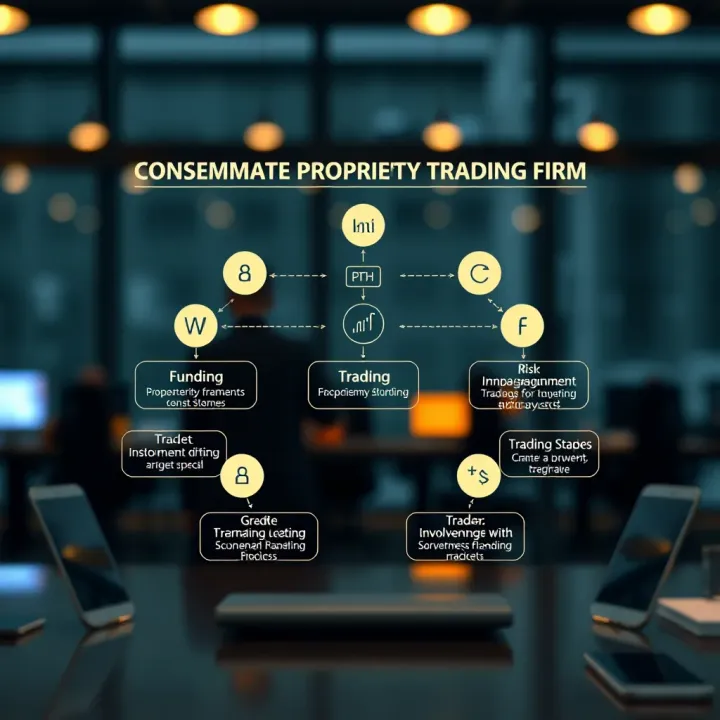
These firms typically structure their operations around distinct funding models. Some offer funded accounts after an evaluation or challenge phase, where traders prove their skills under simulated or live-market conditions. Successful traders then receive a funded account with fixed capital and profit-sharing terms. Others may invite experienced traders directly into profit-sharing partnerships or salaried roles.
Risk control is a defining feature of consummate prop firms. They set clear limits on losses, position sizes, and daily drawdowns. Losing beyond pre-set thresholds may lead to suspension or account reset to protect the firm's overall capital. By enforcing these guardrails, firms preserve resources and ensure sustainable trading practice, which also disciplines the trader’s approach.
Trading with a prop firm is not free money—it carries risks and requires full commitment to the firm’s rules, strategies, and risk limits.
For Nigerian traders, joining a reputable prop firm often starts with demonstrating consistent profitability and risk management skills, either through proprietary evaluation programmes or by showcasing a verifiable trading track record. Many prop firms today operate fully online, enabling Nigerians to apply and trade remotely, but local regulations, taxation, and payment mechanisms like Paystack or Flutterwave should be well understood.
Understanding these fundamental aspects of prop firms equips aspiring traders with the insight to make informed choices. The benefits include access to larger capital, mentorship, and professional trading environments. On the flip side, traders must be mindful of contract terms, profit splits, and the potential for stringent evaluations.
This article explores the nuts and bolts of consummate proprietary trading firms to help you navigate this trading avenue confidently.
Understanding what makes a proprietary trading firm (prop firm) stand out as consummate is key to grasping how these firms operate differently from other trading entities. Such firms provide experienced traders with access to the firm's capital, allowing them to trade larger volumes without risking personal funds. For Nigerian traders aiming to grow their trading careers without hefty capital, recognizing these traits helps in choosing a reliable prop firm.
A consummate prop firm manages a sizeable pool of company capital, sometimes running into millions of dollars, which it allocates to skilled traders. This capital backing allows traders to execute strategies at a scale that individual investors rarely afford. For example, a prop firm might provide a trader ₦20 million in buying power, signalling strong confidence and resources. Moreover, leading firms actively engage with their traders through training, feedback, and performance reviews. Rather than just renting out funds, these firms invest time in building trader skills.
Reputation matters a lot in the prop trading world. Established firms boast a track record of profitability, fair treatment of traders, and transparent rules. They often operate under strict regulatory oversight, either locally or internationally, to protect investors and maintain trust. For instance, some Nigerian traders prefer firms registered with global regulators like the UK’s FCA or the US SEC for added security. A strong reputation reduces the risk of scams or unfair contract terms, which Nigerians encounter too often in fintech and trading sectors.
Consummate prop firms typically offer broad access to various financial markets, including stocks, forex, commodities, futures, and sometimes cryptocurrencies. This variety lets traders specialise or diversify as per their strengths. For Nigerian traders, access to global forex and commodity markets is particularly attractive due to their local familiarity with those instruments and Nigeria’s role as an oil exporter. The wide range of trading instruments allows flexible strategies and better risk management.
Unlike retail brokerages that facilitate trading primarily with personal funds, prop firms provide their own capital, which traders use after passing evaluations. Retail platforms focus on individual investors and apply spreads, commissions, and margin calls directly affecting the trader’s own balance. In contrast, prop firms bear the capital risk but impose rules on loss limits and position sizes to protect their funds. This changes incentives: the trader works to preserve company capital rather than risking their own savings.
Hedge funds and asset managers usually manage pooled client funds and have more formalised structures, including regulatory filings, investor relations, and specific investment mandates. Prop firms, though professional, mainly provide capital to individual traders who keep a share of profits based on performance. The focus is on trader skill rather than fund management strategy. Nigerian traders looking for faster career growth or independence find prop firms more accessible compared to joining hedge funds, which typically require significant licensing and greater capital.
Choosing the right prop firm depends on understanding these differences and matching your trading style and goals with the firm’s structure and reputation.
This clear grasp of what consummate proprietary trading firms represent helps traders make better decisions and avoid common pitfalls when joining. Nigerian traders especially benefit from focusing on firms that offer strong capital backing, good regulatory standing, and diverse market access.

Understanding the structure and funding models of proprietary trading firms is key to grasping how these businesses operate and serve traders. This section breaks down how capital is allocated to traders, the leverage they can access, and how profits and fees are shared. These elements shape traders' opportunities and risks, especially for Nigerian investors navigating this space.
Typical funding sizes offered by prop firms vary widely, usually depending on the trader’s experience and the firm’s policies. For example, a consummate prop firm might provide new traders with ₦5 million to ₦20 million in capital during their evaluation period. More experienced traders or those who pass evaluation may access ₦50 million or more. These allocations allow traders to engage meaningfully in markets like forex, equities, or commodities without risking personal savings.
Conditions attached to funding often include rules on drawdown limits and trading hours, which protect the firm’s capital while giving traders a clear framework. Nigerian traders should note that such rules might vary and must be respected to maintain their funded status.
Leverage is another critical factor prop firms provide. Leverage amplifies buying power, enabling traders to control large positions with relatively small capital. A typical leverage ratio might be 1:10 to 1:20, which is conservative compared to retail brokers but serves to manage risk better. Since Nigerian traders face currency volatility and unpredictable market swings, moderation in leverage helps avoid rapid capital erosion.
Margin requirements set the minimum funds a trader must maintain to hold positions. Prop firms’ margin policies usually enforce strict limits to prevent excessive risk-taking. For instance, if a trader’s margin drops below the requirement, positions may be liquidated to protect the firm’s interest. Understanding these mechanics is vital to trading successfully with company funds.
Profit split structures form the backbone of compenstation in prop firms. Commonly, traders receive between 60% to 80% of the profits they generate, with the firm keeping the remainder as payment for providing capital and infrastructure. For instance, a 70/30 split is quite standard, meaning a trader earning ₦1 million profit takes ₦700,000 home. This setup incentivises performance while spreading risk.
Some firms offer tiered profit splits that increase traders’ share as they hit higher profit milestones. This approach rewards consistent winners and helps Nigerian traders scale earnings over time.
Evaluation fees are often required before traders can access company capital. These fees cover administrative and risk assessment costs and can range from tens of thousands to hundreds of thousands of naira. For example, a ₦100,000 fee may secure a trader’s spot in a 30-day evaluation phase.
Other costs might include monthly platform fees or subscriptions to data feeds, which traders must factor into their overall profitability calculations. Awareness of these charges is important, especially considering Nigeria’s frequent power and internet reliability issues, which can add hidden costs.
Evaluating capital terms, leverage, and fee structures carefully protects traders from unexpected losses and sets clear expectations for the profit journey.
In summary, the structure and funding models of a consummate prop firm provide a framework balancing opportunity with controls. Nigerian traders who understand these specifics can better determine which firm matches their goals, risk appetite, and trading style.
Risk management and trading rules form the backbone of consummate proprietary (prop) trading firms. They ensure the firm’s capital is safeguarded while traders operate within clearly defined boundaries. These controls create a balanced environment where traders can perform confidently without exposing the firm to excessive risks. The structured approach not only protects the company's funds but also sets clear expectations for traders, reducing ambiguity in high-stakes trading.
Daily loss limits and max drawdown are critical for containing losses within manageable levels. A daily loss limit is the maximum amount a trader can lose in a single day before trading activities are halted. For example, if a trader has a daily limit of ₦500,000 and they hit this threshold, they must stop trading immediately that day. Max drawdown refers to the maximum allowable loss across the entire trading period; breaching this could result in contract termination. These limits shield the firm’s capital from sudden, significant losses and encourage traders to be cautious rather than reckless.
Position sizing and instrument restrictions further reduce risk by controlling how much capital a trader can deploy on individual trades and what markets or assets they can engage with. For instance, a prop firm might limit traders to a maximum of 5% of their account on any single position. Additionally, some instruments—like highly volatile forex pairs or certain derivatives—may be restricted due to their risk profile. This approach keeps exposure stable and prevents a trader from over-leveraging on risky bets, which is especially important when firm capital is on the line.
Regular reviews and performance benchmarks help keep trading activities transparent and productive. Prop firms typically review trader performance weekly or monthly, using benchmarks like profit targets, consistency, and adherence to rules. Such evaluations identify whether a trader is meeting expectations or requires coaching or intervention. For example, a trader meeting or exceeding a monthly profit target of ₦1 million while sticking to risk controls would be rated positively, increasing their trustworthiness and potential capital allocation.
Rules for continuing or terminating trader contracts provide clear guidelines on how long traders remain funded and under what conditions their contracts may end. Consummate prop firms often include clauses for terminating contracts if traders repeatedly breach rules or suffer sustained drawdowns. Conversely, consistent performers may see their contracts renewed or even upgraded with larger capital. This accountability ensures that only traders who manage risk effectively and deliver results handle firm funds, supporting the firm's long-term financial health.
Maintaining robust risk management and trading rules is not simply a bureaucratic formality—it directly impacts the firm's success and a trader’s career prospects. Nigerian traders should understand these aspects thoroughly before joining, as discipline here often separates those who profit from those who quickly exit.
In essence, these risk controls and monitoring practices create a professional framework where both the firm and traders can thrive in a competitive market.
Joining a proprietary trading firm requires more than just an interest in trading—it demands a clear understanding of the firm's application and evaluation protocols. For Nigerian traders eyeing this opportunity, knowing the right steps and expectations can make a big difference in success.
Prop firms typically start with a screening phase, where traders apply and submit basic information about their trading experience and strategies. This often leads to a demo trading stage, where the firm provides virtual capital for the trader to prove their skills without risking real money. Successful navigation of this phase signals readiness for funded trading.
During demo trading, the trader must meet specific targets set by the firm, such as a percentage profit within a time limit while respecting drawdown rules. For instance, a firm might require a 10% profit in 30 days with a daily loss limit of 2%. This setup helps firms assess how disciplined and effective a trader is before committing their capital.
Common evaluation criteria include consistent profitability, risk management adherence, and trading strategy validity. Firms look beyond just wins; they focus on the trader's ability to control losses and stick to rules. This is crucial since financial loss impacts the firm's capital directly.
Nigerian traders must navigate local challenges, such as exchange rate volatility, internet disruptions, and intermittent power supply. Understanding these factors helps traders plan trading times and manage risk carefully. For example, ensuring uninterrupted power during critical trading hours can shield against unexpected losses.
Disciplined, strategic trading is vital. Success in prop firms depends on following risk limits strictly, avoiding impulsive trades, and adapting strategies based on market conditions. Developing a consistent trading routine and maintaining emotional control helps Nigerian traders stand out. Practising thorough record-keeping and regular self-assessment can improve performance significantly.
Joining a prop firm is not just about talent but proving reliability through consistent, risk-aware trading. Nigerian traders who grasp this balance stand a better chance of thriving in these competitive environments.
Trading with a consummate proprietary (prop) firm offers distinct benefits compared to going solo, but it also comes with specific risks. It’s important to weigh these factors carefully, especially if you’re a Nigerian trader looking to optimise your strategies and capitalise on company funds rather than your own. This section outlines the practical upsides and potential pitfalls so you make informed decisions.
One major advantage of trading through a prop firm is access to significantly larger capital than most individual traders can muster. Instead of trading with just your personal funds—often limited by income and savings—you can manage the company’s money, which can run into tens or hundreds of thousands of naira. For instance, a Nigerian trader with ₦50,000 personal capital may gain access to ₦1 million or more through a prop firm, allowing higher-volume trades and bigger potential returns.
This scale can open doors to markets or instruments requiring bigger margins that individual retail accounts cannot afford. It also allows traders to diversify positions, reducing single-trade exposure. Essentially, you trade on a much larger playground, which could improve earnings if combined with solid skills and discipline.
Another practical benefit is the limited downside risk to your own wallet. Since you don’t use personal funds for live trading but company capital, your financial exposure mainly includes any fees or deposits needed to join the prop firm. Unlike outright independent trading, where a bad streak can quickly burn your savings, trading with prop capital shields your personal finances.
That said, traders should understand that any evaluation fees or deposits paid upfront can be lost if performance criteria aren’t met. Yet, the core trading risks—like market losses while live—are borne by the prop firm, not your own naira, which eases psychological pressure and allows a sharper focus on strategy.
Consummate prop firms enforce strict controls, including daily loss limits, maximum drawdowns, and position size restrictions. These are to protect firm capital but can sometimes feel restrictive to traders used to free rein.
For example, if a daily loss limit is ₦100,000, hitting it means automatic shutdown or suspension of trading for the day. Such rules require strict discipline and can frustrate traders who want to recover losses quickly or take bigger risks. Nigerian traders especially should prepare mentally for these rigid boundaries, as disregarding them can lead to termination of the trading contract.
Many prop firms require candidates to pay evaluation fees or deposits before trading live accounts. These can range from a few thousand to tens of thousands of naira and are typically non-refundable.
If you fail to meet the firm's trading performance standards during the evaluation phase, your fees or deposits may be forfeited. This risk means you should approach evaluations cautiously and not stake more than you can comfortably lose. For Nigerian traders, this is crucial since the naira's volatility and local financial pressures can make such losses painful if not well planned.
Remember, joining a prop firm isn’t a quick ticket to wealth — it demands skill, discipline, and readiness to meet tough standards. Knowing the advantages and the risks helps you prepare better and secure a strong footing in prop trading.
Explore coin trading tips for Nigerian investors 🇳🇬 Learn how to trade crypto safely, understand price factors, and manage risks for ₦-wise profits 💹🔒

📈 Master crypto trading in Nigeria with this practical guide! Learn market basics, risk control, and how to handle naira swings and regulations confidently.

Explore top online trading tips for Nigerians 🇳🇬. Learn how to pick reliable platforms, manage risks, and navigate asset classes within Nigeria’s financial rules 📈💹.

Discover practical tips on forex trading in Nigeria 🇳🇬, including key regulations, common challenges, and how technology is shaping ₦trading for local traders.
Based on 7 reviews