
Understanding the Asian Trading Session for Nigerian Traders
Explore how Nigerians can time forex and stock trades during the Asian session 🕒, learn key market traits, and get practical tips to boost trading success from Lagos to Abuja.
Edited By
James Thornton
The Asian session is one of the three major forex trading periods, alongside the London and New York sessions. It typically runs from 11:00 pm to 8:00 am Greenwich Mean Time (GMT), covering key financial centres such as Tokyo, Singapore, Hong Kong, and Sydney. This session sets the tone for the day’s trading, especially for Asian currencies like the Japanese yen (JPY), Singapore dollar (SGD), and Australian dollar (AUD).
During this session, price movements tend to be more measured compared to London or New York. Market activity is generally lower, but this does not mean it lacks opportunities. Traders often see steady trends and distinct volatility bursts that can be exploited with the right strategies. For Nigerian traders, understanding the timing and behaviour of the Asian session can improve timing and risk management.
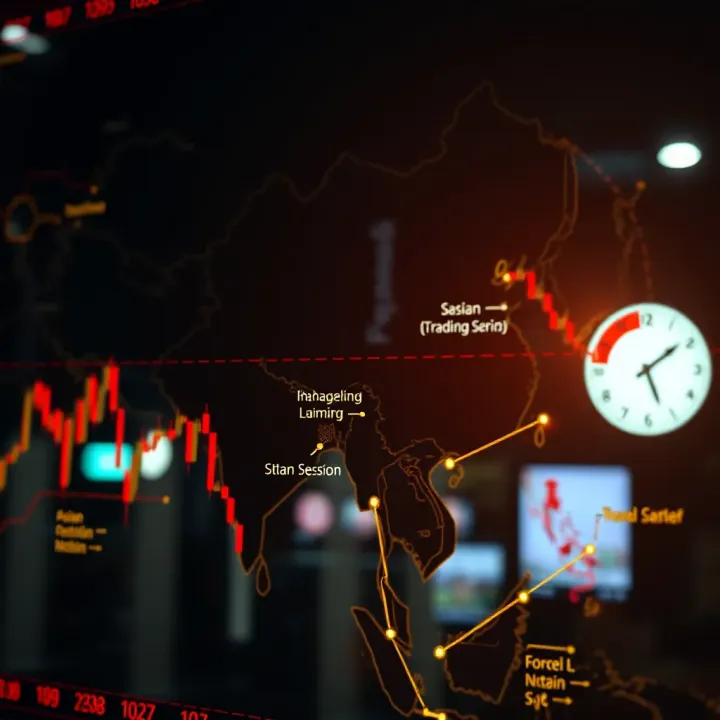
Lower volatility compared to London and New York sessions but with occasional spikes due to economic data releases from Asia-Pacific countries.
Narrower trading ranges, favouring range-bound strategies or breakout plays during news events.
Traders often focus on yen crosses because of the active Japanese market.
Understanding the Asian session helps forex traders catch early market moves and prepare for the busier London session that follows. It’s about reading the calmer seas before the ocean gets rougher.
Nigerian investors can leverage this knowledge by monitoring Asian economic calendars and news, using tools like Paystack or Flutterwave for timely execution, especially when the naira pairs show movements tied to Asian market activity. While the session overlaps less with Nigerian business hours, its influence on global markets means ignoring it can leave gaps in trading strategy.
Knowing how the Asian session operates allows traders to plan entries and exits wisely, reduce slippage, and anticipate price action that might set up the day’s main trends. This foundational insight is crucial for anyone serious about forex trading across time zones.
Understanding the timing of the Asian forex session is vital for traders aiming to capitalise on distinct market behaviours at different hours. The session's schedule sets the stage for liquidity patterns, volatility, and price action that differ notably from London or New York sessions. Knowing exact start and end times helps traders plan their activities and spot the best trading windows.
The Asian session generally runs from 11 pm to 8 am Nigerian local time (West Africa Time, WAT). For Nigerian traders, this means markets open late evening into the early hours, often coinciding with quieter domestic hours but overlapping with Asian business times. This window offers opportunities for those who prefer trading when global markets outside Nigeria are active.
The session overlaps with the late stages of the New York session (until about 12 am WAT) and the early London session starting around 7 am WAT. This overlap period tends to show heightened activity as liquidity from both markets meets. For example, between 7 am and 8 am WAT, market moves can gain momentum, useful for breakout or momentum strategies.
Daylight saving changes in countries like Australia and parts of Asia can shift these hours slightly. However, Nigeria does not observe daylight saving, which means traders must adjust their schedules when Asian centres shift clocks. Such seasonal shifts can affect when news announcements or market opens occur, so traders should actively monitor calendars.
Tokyo stands as the major hub during the Asian session. It’s the largest financial centre in the region, driving significant trading volume, especially for JPY pairs like USD/JPY. When Tokyo opens, market participants react promptly to economic data released locally, influencing price action significantly.
Singapore and Hong Kong act as important financial centres as well, serving as regional hubs for commodities, banking, and trading activities. These centres contribute to liquidity and influence currency pairs involving SGD and HKD. Their overlap with Tokyo ensures continuous activity throughout the session.
Australian markets, led by Sydney, mark the start of the Asian session and bring early market cues. Although smaller compared to Tokyo or Singapore, movements in AUD pairs often reflect Australian economic news or commodity prices, impacting forex prices. Traders focusing on AUD/USD or AUD/JPY monitor Sydney’s opening keenly for early trends.
The Asian session’s schedule not only affects price dynamics but also offers unique trading opportunities based on the timing of financial centres and their overlapping hours, crucial for devising effective trading strategies tailored to time zones.
The Asian session runs from 11 pm to 8 am WAT
Overlaps with New York and London sessions at different points
Tokyo dominates trading volume with Singapore and Hong Kong following closely
Daylight saving changes require schedule adjustments
Sydney’s role helps kick off the session and sets early momentum
This clear timing framework aids Nigerian traders in aligning their trading activities to when markets are most active during the Asian hours.
The Asian forex session exhibits unique features that affect trading volume, liquidity, and price movements. Understanding these characteristics helps traders adapt strategies to take advantage of the market environment during these hours. This section breaks down how liquidity and volatility behave, particularly in relation to currency activity and market influences.
Liquidity levels during the Asian session tend to be lower than in the London or New York sessions. This is largely because the major financial hubs in Asia—Tokyo, Singapore, and Hong Kong—are smaller players compared to Western centres. The lower participation means fewer market participants, which often results in narrower trading ranges and less intense market movement. For example, pairs like USD/JPY experience decent volumes, but overall, the session shows a quieter market compared to peak European or American hours.
However, this lower liquidity provides both challenges and opportunities. Nigerian traders need to be cautious as spreads can widen unpredictably, especially in less active pairs. Yet, some traders use this time for range-bound strategies or scalping techniques, exploiting the stable, less volatile price zones.
Currency activity during the Asian hours focuses on the Japanese yen (JPY), Australian dollar (AUD), and New Zealand dollar (NZD). The prominence of these currencies arises from their home markets being active during these hours. For instance, USD/JPY and AUD/USD often display clearer price action patterns in this window. For Nigerian traders active in forex, focusing on these pairs during the Asian session can increase chances of identifying meaningful moves linked to local market news or regional economic developments.
Volatility in the Asian session is generally lower compared to the London and New York sessions. Price movements tend to be restrained, reflecting the limited participation and fewer major news events outside Asia. This means breakouts are less frequent, and the market often moves sideways or within defined ranges.
Still, traders in Nigeria should watch out for spikes in volatility triggered by scheduled economic data releases from Japan, China, or Australia. For example, the release of Japan's Tankan survey or Australia’s employment figures often stirs swift price actions, especially in JPY and AUD pairs.
Geopolitical news or unexpected events in the Asian region can also disrupt typical trading patterns. Issues like trade tensions, political developments in Hong Kong, or central bank policy signals from the Bank of Japan (BoJ) influence price movements markedly. Traders who keep a close eye on such factors gain an edge by anticipating potential volatility surges and adjusting their risk management accordingly.
Navigating the Asian forex session requires patience and sharp awareness of both liquidity and volatility patterns, particularly around major economic announcements and regional geopolitical developments.
Understanding these session characteristics enables Nigerian forex traders to better structure their trading plans, select the most active pairs, and manage risk effectively during the Asian hours.
The Asian trading hours shape forex market activity in unique ways, particularly influencing specific currency pairs. Understanding these effects gives traders a stronger edge when planning entry and exit points during this period. Many currency pairs behave distinctly due to liquidity concentration in Asian financial hubs like Tokyo and Singapore. Nigerian traders who follow the Asian session can spot emerging trends early, especially before London and New York sessions open full throttle.
Japanese yen pairs, especially USD/JPY, show pronounced activity during the Asian session because Tokyo is the central forex hub in Asia. Price moves tend to be steadier with moderate volatility due to the liquidity coming from Japanese banks and institutional traders. For instance, if you're trading USD/JPY around 3 pm WAT, you should expect more consistent volume and smaller price swings compared to the London session, where volatility spikes. This steadiness makes USD/JPY appealing for range traders who thrive on price consolidation.
Pairs with the Australian dollar (AUD) and New Zealand dollar (NZD), like AUD/USD and NZD/USD, gain momentum earlier in the Asian session, reflecting the opening of markets in Sydney and Wellington. These pairs often experience wider ranges during the first few hours of the session due to regional economic news or commodity price shifts, given Australia and New Zealand's strong commodity export profiles. Nigerian traders keen on these pairs should monitor updates linked to gold and dairy prices, as shifts here can spark notable moves.
Pairs involving Asian currencies such as the Singapore dollar (SGD) or Hong Kong dollar (HKD) tend to display unique patterns during the Asian session. These crosses, like SGD/JPY or HKD/USD, often react sharply to regional geopolitical developments or policy changes, offering nimble traders quick profit chances. However, liquidity tends to be thinner for these pairs compared to majors, requiring disciplined risk control.
Even though the Nigerian naira (NGN) isn’t among the most liquid currencies globally, forex traders in Nigeria still feel the effects of the Asian session through its impact on major currency pairs. Movements in Asian currencies and commodity-linked pairs indirectly influence the NGN, especially given Nigeria’s oil-dependent economy. For example, fluctuations in AUD/USD or USD/JPY during Asian hours can hint at global risk sentiment shifts, which tend to ripple into naira exchange rates. Nigerian traders can use this insight to time local forex market deals judiciously.
GBP/USD typically quietens down during the Asian session as London is yet to open or just about to start, butEUR/JPY can pick up pace early because it straddles European and Asian sessions. The relative activity in EUR/JPY offers traders a chance to catch emerging trends before European markets fully get involved. Nigerian traders observing EUR/JPY around 3 to 5 pm WAT may spot early signals of upcoming European session volatility — a practical edge for short-term trades.
Mastering how currency pairs behave during the Asian session lets you catch market moves others might miss. Being alert to the unique dynamics of this period can improve your timing and boost trading results across diverse pairs.
Trading the Asian forex session requires tailored strategies since this period shows unique market behaviours compared to London or New York sessions. Understanding these strategies can help you capitalise on the session’s characteristics such as lower volatility, consolidation phases, and sporadic volatility spikes driven by Asian economic data. This section breaks down practical approaches like scalping, range-trading, and breakout trading, helping you navigate the Asian hours with better precision and risk management.
Identifying consolidation zones during the Asian session is essential since this period often features tight price ranges. Traders look out for periods where price movements are boxed within narrow support and resistance levels, signalling a lack of strong trends. For example, USD/JPY off the Tokyo opening can enter these consolidation zones, which provides ideal entry points for scalpers who aim to make quick, small profits repeatedly. Spotting these zones early allows traders to place trades with tight stop-loss orders, reducing exposure.
Using low volatility to advantage means recognising that the Asian session generally has reduced market swings compared to other trading hours. While lower volatility might seem less attractive, it creates excellent opportunities for range-bound strategies, where traders benefit from predictable, sideways market action. Nigerian traders can exploit this by setting buy orders near support and sell orders near resistance, knowing the market is less likely to break out strongly without a catalytic event. This strategy suits those who prefer steady, incremental gains rather than chasing volatile movements.
How economic announcements in Asian markets create opportunities is a key trading point. Though the session tends to be quieter, scheduled releases like Japan’s Tankan survey or China’s manufacturing PMI can create sudden price movements. For instance, a surprising Chinese economic figure can trigger sharp volatility in AUD and NZD pairs. Being prepared for such announcements gives Nigerian traders a chance to enter breakouts early and capitalise on momentum shifts that often extend into the London session.
Managing risk when volatility spikes during these news events is critical. Sudden price jumps can invalidate typical consolidation zones and cause stop-loss orders to be hit unexpectedly. Traders must adjust position sizes and consider wider stops temporarily when trading around scheduled releases. Using tools like limit orders or guaranteed stop-loss can help protect capital during such periods. It’s wise to stay out or significantly reduce exposure if uncertain about the news impact, especially since the Asian session’s usual calm can quickly turn unpredictable.
Mastering both calm and volatile phases of the Asian forex session sharpens your trading edge, allowing you to capture steady profits or sudden breakouts with appropriate risk controls.
Employing these strategies helps traders navigate the Asian session's peculiar features effectively. Scalping and range-trading capitalise on stability, while breakout trading benefits from timely reactions to Asian economic data releases — a balanced approach that suits many traders operating from Nigeria's time zone and economic context.
Understanding how the Asian forex session stacks up against the London and New York sessions is vital for traders aiming to make smarter decisions. Each session exhibits unique traits in terms of liquidity, volatility, and market behaviour. Knowing these differences helps you pick the best time to trade and tailor your strategy accordingly.
The Asian session generally shows lower volatility and trading volume compared to London and New York sessions. Tokyo, Singapore, and Hong Kong markets have less active participation from global players, which means price movements tend to be more contained. For instance, major currency pairs like EUR/USD and GBP/USD usually see less action in Asian hours, while pairs such as USD/JPY and AUD/USD gain more attention.
In contrast, London is known for high liquidity and volatility, especially during its overlap with New York. The New York session itself also experiences significant price swings as US economic data and market sentiment come into play. This difference becomes crucial when setting stop losses or deciding on trade frequency.
During the Asian session, markets often consolidate within ranges, reflecting the lower volume and less aggressive trading. Traders will notice many currency pairs trading sideways before bigger moves happen when Europe or America joins in. For example, the USD/JPY pair might hover in a tight band during Tokyo hours but suddenly break out when the London session ticks in.
On the other hand, London and New York sessions tend to feature sharper breakouts and trends, driven by heavier participation and news releases. These sessions are usually more reactive to geopolitical events or economic reports. Thus, trading in Asian hours requires a patience and focus on range-bound strategies, while London/New York sessions suit momentum or breakout styles.
If you prefer calm markets with less erratic price action, the Asian session fits well. Scalpers and range traders benefit here because volatility is lower, allowing for tighter stop losses and measured risk. Conversely, traders who thrive on high volatility and volume, seeking bigger daily moves, will favour London and New York sessions.
Consider your risk appetite and time availability. For example, day traders in Lagos might find it easier to trade during Asian hours (midnight to 9 am WAT) if they have night shifts or prefer quieter markets. But if you want more action and can cope with wider spreads, trading during London or New York sessions will be more profitable.
For Nigerian traders, timing and session choice matter because of the local market environment and work-life balance. The Asian session aligns with late night and early morning in Nigeria, which might be less convenient for some but offers unique opportunities on JPY and AUD pairs.
Many Nigerian traders focus on major pairs like USD/NGN during London and New York hours when liquidity surges, affecting price competitiveness. However, leveraging Asian session activity on Asian-influenced pairs can diversify your portfolio. Moreover, understanding session overlaps, especially when Asian and London times converge, can uncover short bursts of added volatility.
In practical terms, planning your trades around session characteristics helps avoid chasing volatile moves blindly. It also improves risk management, especially considering naira fluctuations and news impacting Nigerian markets. By picking the session that suits your lifestyle and strategy, you increase your edge in this highly competitive environment.
Knowing the differences between forex sessions empowers you to trade smarter, not harder. Understanding the quieter but steady Asian session alongside the dynamic London and New York hours lets you align trades with your personal style and local realities.
Asian session: lower volatility, range-bound, suited for scalping and patient trading
London/New York sessions: higher volatility, trend-driven, better for momentum traders
Nigerian traders must balance session timing with lifestyle and market focus for optimal results
Explore how Nigerians can time forex and stock trades during the Asian session 🕒, learn key market traits, and get practical tips to boost trading success from Lagos to Abuja.
Learn how mitigation in forex trading helps manage risks and protect investments 💹 Discover strategies, tools, and tips to minimize losses in Nigeria's currency market.
📊 Learn how deviation in forex trading affects your orders, what causes it, and practical ways to manage risks and protect your trades from sudden price shifts.

🤖 Discover how forex trading robots use market data and algorithms to automate trades. Learn their benefits, risks, and tips Nigerians need before investing ₦ in forex.
Based on 12 reviews