

Understanding Binary Charts and Their Uses
📊 Discover how binary charts visualize data with clarity. Learn to read and use them in computing, finance, and more for better decisions.
Edited By
Isabella Clarke
A derivative chart is a powerful tool to understand how quickly something changes over time or in relation to another variable. For traders, investors, and financial analysts in Nigeria, this is no small matter—these charts help you spot when a stock, commodity price, or market index speed up, slow down, or change direction.
At its core, a derivative chart shows the rate of change of a function. If you imagine following the price of an asset across days or weeks, the derivative chart tells you how fast that price is climbing or falling at any given moment. Instead of just knowing the price itself, you see the speed and momentum behind the moves.
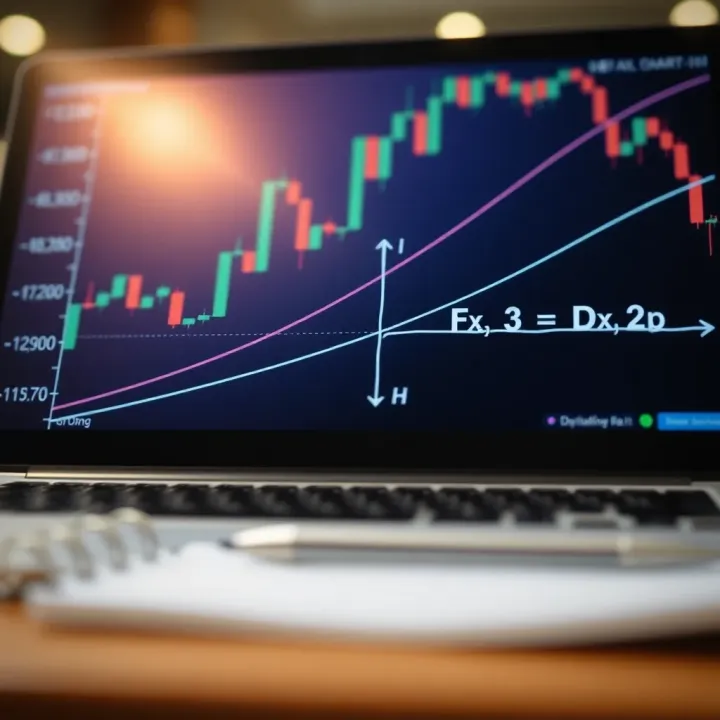
Understanding the rate of change can be the difference between catching a trend early or missing the boat entirely in a volatile market like Lagos Stock Exchange.
Momentum shifts: It highlights when the pace of price movement grows stronger or weaker.
Turning points: When the derivative crosses zero, it often signals a local minimum or maximum in the original price data—valuable for timing buys or sells.
Trend strength: Bigger spikes in the derivative suggest stronger upward or downward trends.
Consider the price movements of crude oil, a major economic factor for Nigeria. If the price trend graph suddenly flattens but the derivative chart shows a sharp negative slope, it signals an impending downturn even before the price noticeably dips. Investors paying attention here can adjust portfolios to avoid losses.
Similarly, a trader monitoring Naira/USD exchange rate might use derivative charts to gauge how quickly the naira is depreciating beyond just the daily rate, helping hedge against sudden currency shocks.
By monitoring derivative charts alongside regular price charts, Nigerian traders and entrepreneurs can gain proactive insights, making their actions more strategic rather than reactive. This is especially vital during the ember months when market volatility tends to spike due to festive spending and policy announcements.
In sum, the derivative chart is an indispensable visual tool. It transforms raw price data into actionable intelligence about the speed and direction of changes, helping you make smarter investment or business decisions grounded in timely information.
Understanding the core of a derivative chart matters, especially for traders, investors, and financial analysts who need to grasp how numbers shift over time. A derivative chart is essentially a graphic tool showcasing the rate at which a quantity changes, highlighting how quickly or slowly an underlying function moves. This insight helps you catch turning points in markets or spot when a trend is strengthening or losing pace. For example, if the price of a stock moves steadily, its derivative chart will reveal whether that movement is picking up speed or slowing down, enabling timely investment decisions.
A derivative fundamentally represents the rate of change of a function with respect to an independent variable like time or price. In practical terms, it tells you how fast a value is rising or falling. Traders watching the derivative of a stock price, for instance, learn whether the price momentum is accelerating or decelerating. This rate of change is especially important in volatile markets such as Nigeria's equities or FX, where prices swing sharply and swiftly.
Drawing the derivative on a chart transforms abstract rates of change into visible lines or curves you can interpret at a glance. Instead of staring at tables of numbers, you see spikes or dips that point to changes in direction or velocity. Consider a business tracking sales volume month-to-month: a derivative chart instantly flags when sales growth hits a plateau or begins to drop, allowing swift action before losses mount.
A derivative relates closely to the slope of a function's curve—basically, how steep the curve is at any point. This slope is a direct indicator of change; the steeper it is, the faster the change. On a price graph, a steep rise means rapid gains while a flat slope signals stable or unvarying prices. In a Nigerian context, when analysing fuel price trends, the slope helps reveal periods of sharp increase or stability, important for budgeting and forecasting.
The derivative corresponds to the gradient or incline of the function’s graph. A positive gradient means the function is increasing, while a negative one shows decline. Zero gradient signals a peak, trough, or pause in movement. This concept is key in business and economics—it clarifies growth phases and recessions. Say you are monitoring inflation rates; a derivative chart highlights precisely when inflation speed changes, helping policymakers or investors react appropriately.
A derivative chart turns complex changes into clear signals, making it easier for Nigerian investors and analysts to anticipate market shifts and make informed decisions.
In summary, understanding what a derivative chart is and how it works provides valuable clues into the behaviour of varying data. It moves us from simply knowing what values are to understanding how those values change—crucial for anyone serious about data-driven decisions in Nigerian markets.
Knowing how to read and interpret a derivative chart is a skill every trader, investor, or financial analyst must master. These charts reveal how quickly a quantity changes, which can signal trends before they fully manifest on a standard price or value chart. In Nigeria's dynamic market environment, spotting these changes early—be it in the naira exchange rates or stock prices on the NGX—can make all the difference in decision-making.
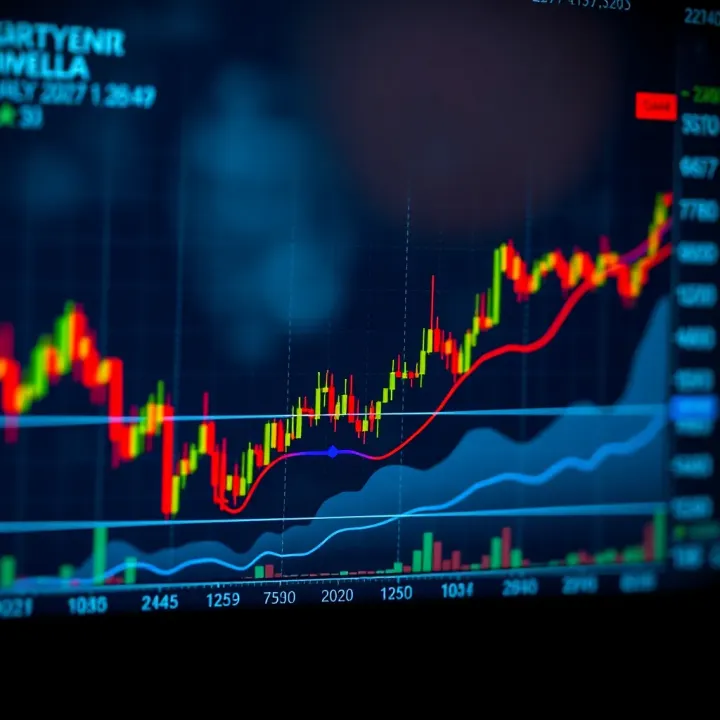
The horizontal axis usually represents the input variable, such as time or quantity, while the vertical axis shows the derivative value or rate of change. For example, in tracking naira exchange rates, time might be marked in days along the x-axis, while the y-axis indicates how fast the naira’s value is swinging daily. Understanding these scales helps you appreciate whether changes you see are gradual or sudden. If the scale on the y-axis is too tight, minor fluctuations might look exaggerated, leading to wrong conclusions.
The sign of the derivative tells you if the underlying value is rising or falling. A positive derivative means growth or increase; Nigerian entrepreneurs observing sales figures might spot a positive slope during the start of the ember months, indicating growing demand. A negative slope signals decline—perhaps falling stock prices or decreasing inflation rate. When the derivative hits zero, it often marks a turning point, like the peak of a sales cycle or where inflation stops rising.
The steepness of the slope on a derivative chart directly reflects how fast the underlying value changes. A steep positive slope represents rapid growth; for instance, a fast increase in demand for fuel during shortages is captured clearly. Conversely, a steep negative slope warns of swift deterioration—such as naira depreciation after a major policy shift. Shallow slopes suggest slower changes, helping businesses plan without panic.
A flat slope means the rate of change is stable—usually zero—implying the variable holds steady. If a trader sees a flat derivative after a boom, it might suggest the market is stabilising. However, changing slopes, where the rate itself is rising or falling, hint at acceleration or deceleration in trends. For example, a slowing positive slope on inflation rate means inflation is increasing but at a decreasing pace, a subtle but important difference for policy analysts.
Understanding these components allows skilled professionals in Nigeria’s markets to make timely, data-driven decisions—avoiding costly surprises and leveraging opportunities early.
By focusing on the axes, the signs, and the shape of slopes in derivative charts, you gain a sharper lens to evaluate economic data or business performance. This makes derivative charts an essential tool in financial and market analysis within Nigeria’s unique economic context.
Derivative charts play a vital role in analysing dynamic data across sectors in Nigeria. They highlight how fast variables change over time, helping traders, investors, and analysts make timely decisions. Nigerian economic conditions often fluctuate, so tracking rates of change offers an edge in understanding market movements beyond just the numbers.
The naira exchange rate with major currencies like the US dollar experiences regular volatility due to various factors such as oil prices, central bank interventions, and foreign capital inflow or outflow. A derivative chart reveals the speed and direction of these changes rather than only their absolute value. For instance, a positive derivative signals a rising naira value relative to dollars, while a negative slope indicates depreciation accelerating or decelerating.
This timely insight can guide forex traders or importers in Nigeria to adjust their strategies quickly. Instead of reacting after a shift in rate, understanding the rate of change allows them to anticipate possible turning points. For example, during the 2023 naira devaluation episode, derivative charts showed a sharp downward slope before the official announcements, serving as an early warning.
Inflation rates in Nigeria affect everyday costs like food, petrol, and utilities. Derivative charts of inflation data expose how fast prices rise or fall, helping the Central Bank of Nigeria (CBN) and policy experts to gauge if recent monetary policies curb or accelerate inflation.
When inflation derivative charts show a slowdown, it means the price increases are tapering off, signalling a potential cooling of the economy. On the other hand, steep derivative rises can suggest emerging price shocks, prompting businesses to adjust their cost structures. Such insights are especially valuable during ember months when spending peaks, making inflation impacts more critical and immediate.
For Nigerian entrepreneurs and business owners, keeping track of sales growth speed offers more than total sales figures. Derivative charts help identify whether sales increase is steady, spiking, or slowing. For example, a retail company using sales data from several locations can spot regions with fast-growing demand through positive slope changes.
This allows business managers to allocate inventory, plan promotions, or scale operations promptly. In sectors like telecoms or fintech where user growth can be volatile, derivative charts highlight acceleration or decline phases clearly, guiding investment and marketing decisions.
Consumer goods markets in Nigeria — from gari and suya to electronics and fashion — fluctuate due to seasons, festivals, and income patterns. Derivative charts shine when tracking these demand swings, revealing when buying interest heats up or dims quickly.
For instance, a supply chain manager at a popular suya outlet chain could use derivative charts on sales data to anticipate demand surges during festive periods. By analysing rate-of-change patterns, suppliers can avoid stockouts or unnecessary overstock, optimising both cost and customer satisfaction.
Using derivative charts helps Nigerian businesses and financial actors not just to know what is happening, but how fast it’s changing, which is often the difference between profit and loss in fluid markets.
By incorporating derivative charts into their toolkits, investors, traders, and entrepreneurs gain sharp, actionable insights necessary to navigate Nigeria’s ever-changing economic and market environment.
Using the right techniques to create and interpret derivative charts is essential, especially for traders, investors, and financial analysts working in Nigeria’s dynamic markets. These charts reveal how quickly values—whether exchange rates, stock prices, or inflation indices—are changing, not just their levels. Knowing how to produce these charts manually or with software sharpens decision-making, enabling you to spot trends or reversals early.
Finding derivatives from data points involves estimating the rate of change by calculating differences between consecutive data values. For instance, when tracking the naira exchange rate against the dollar daily, you can find how fast the rate moves by dividing the change in price by the time interval. This method provides a practical, hands-on way to understand derivative concepts without relying on complex formulas or computers, especially in settings with limited digital tools.
This manual approach is particularly useful when you have small datasets or when you want to verify automated outputs for accuracy. For example, a business owner observing weekly sales can measure the slope between points to infer accelerating or slowing demand. This insight guides inventory or marketing adjustments swiftly.
Plotting derivative curves manually means charting these rates of change against time or another variable. After calculating the derivative values, plotting them allows you to visualise whether the underlying function is increasing, decreasing, or plateauing. Experienced traders may notice that a consistently positive derivative curve suggests an upward trend in a stock price, signalling a buy opportunity.
While manual sketching can be time-consuming, it cultivates a deeper understanding of core principles. This is valuable in Nigerian markets where rapid reactions to economic shifts—like CBN policy changes or petrol subsidy adjustments—are common.
Excel and Google Sheets options offer versatile and accessible platforms to calculate and plot derivative charts efficiently. Functions such as difference quotients, data manipulation tools, and chart creation help you process large datasets quickly. For instance, a financial analyst at a bank can use Excel to calculate the derivative of monthly inflation figures, then chart these to predict future trends.
These tools reduce error risk compared to manual calculations and accelerate analysis, crucial for fast-moving financial decisions in Nigeria’s market. Tutorials and templates specific to derivative calculations are widely available, easing adoption even among beginners.
Nigerian fintech and data platforms that support derivative visualisation include systems like Cowrywise, Kuda, and Paystack’s analytics dashboards. These platforms can display derivative-like metrics such as growth rates of investments, transaction volumes, or merchant performance over time. Using these interfaces, investors and entrepreneurs gain quick insights without needing advanced maths skills.
For example, a merchant on Paystack might track the rate at which daily sales increase or decrease to pinpoint when to adjust stock or pricing strategies, especially during ember months when demand spikes unpredictably. As fintech ecosystems mature in Nigeria, derivative visualisation grows more integral to data-driven business management.
Mastering both manual and software-based methods for derivative charts equips you to navigate Nigeria’s financial landscape with confidence, combining foundational understanding with technology for timely, informed actions.
Derivative charts are powerful tools for understanding change, but they come with their own set of challenges and common misconceptions that can easily lead to wrong conclusions if not carefully managed. For traders, investors, and analysts working with Nigerian markets or businesses, recognising these pitfalls helps avoid costly errors and improves decision-making accuracy.
A zero derivative point occurs when the rate of change—or slope—of a function is exactly zero. This usually suggests a local maximum, minimum, or a point of inflection. However, many mistake a zero derivative for a simple pause or flatline in the underlying data's value. For example, in stock price analysis on the Nigerian Stock Exchange (NGX), a zero derivative might appear when a stock price peaks before dropping, but it’s not the price itself stopping; it’s the rate of price change that momentarily halts.
Failing to understand this subtlety can mislead traders into expecting price stability when instead a reversal or sharper movement is coming. To interpret zero derivative points correctly, always cross-check the original data trend and avoid assuming zero slope equals a steady state.
Another common mistake lies in mixing up changes in the slope (derivative) with changes in the actual function value. The derivative shows how fast values are changing, not the values themselves. For instance, a derivative chart of company sales growth may show the slope becoming steeper, indicating accelerating sales. But this does not mean sales volumes have reached a new high; it means sales are rising faster than before.
Traders sometimes react to slope shifts as if they reflect actual price or value changes. This can cause premature buys or sells if one mistakes a slowing growth rate (decreasing slope) as a price drop, when the price might still be rising but at a slower pace. Clarity on this distinction improves timing and strategic responses.
Derivative charts can be quite sensitive to small fluctuations in raw data, commonly called “noise.” For example, in analysing naira to dollar exchange rate changes or daily stock movements on the NGX, small inconsistencies or outliers caused by market rumours, brief liquidity gaps, or data glitches may cause the derivative values to jump erratically.
This noise can make the derivative chart look jittery and hard to interpret effectively. Traders should smooth data or use moving averages before calculating derivatives to reduce these false signals. Awareness of this limitation helps prevent overreacting to minor, non-meaningful price wiggles.
Derivative charts reflect how data has been changing but often cannot predict sudden, unexpected events. Consider Nigeria’s fuel subsidy removal announcements or unexpected Central Bank of Nigeria (CBN) policy shifts. These shocks can cause immediate and large market reactions that the derivative chart won't foresee because it relies on past data patterns.
Hence, while derivative charts help understand recent changes and trends, they are poor predictors of shocks. Traders and investors should complement derivative analysis with qualitative insights and broader market intelligence to prepare for these abrupt moves.
Understanding the challenges and common misreadings of derivative charts sharpens your ability to make better-informed decisions in volatile Nigerian markets. Always interpret the derivative alongside raw data and wider context for the clearest picture.
📊 Discover how binary charts visualize data with clarity. Learn to read and use them in computing, finance, and more for better decisions.
📉 Volatility shows how asset prices change over time, affecting investors and markets. Understand causes, types, and impact for Nigeria and beyond in this clear guide.

Explore derivative trading basics, types, and risks 📈. See how Nigerian investors can navigate these contracts on stocks, commodities & currencies for smart gains ₦!

Explore how binary numbers work, their storage, and practical uses in computing and digital tech, with key insights tailored for Nigerian tech enthusiasts 💻🔢
Based on 6 reviews