
Understanding HODL in Crypto: Meaning and Impact
📈 Discover what 'HODL' means in crypto, its origins, plus why Nigerian investors choose to hold digital assets despite risks and benefits in a volatile market.
Edited By
Sophia Bennett
Volatility refers to how wildly the price of an asset—like stocks, currencies, or commodities—changes over time. For traders and investors, it signals risk: the bigger the swings, the more unpredictable the investment. In practical terms, volatility helps you gauge whether an asset might suddenly rise or drop sharply.
In Nigeria, volatility is especially relevant given the frequent fluctuations in the value of the naira and the impact of global oil prices on the economy. For instance, during election seasons or the ember months, market prices often spike or dip sharply due to uncertainty or higher demand. Understanding volatility lets investors anticipate these movements rather than be caught off guard.
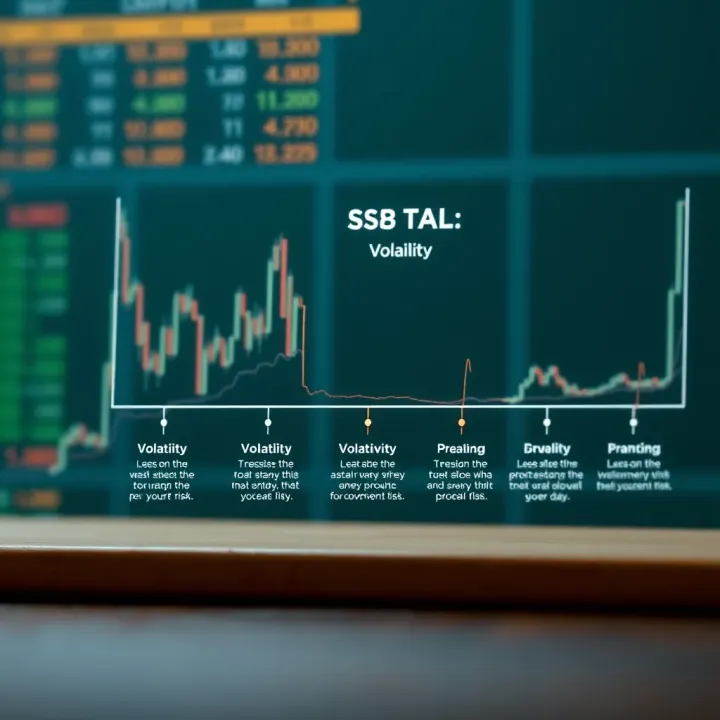
Volatility is not just about scary ups and downs; it’s a useful measure that guides decision-making, risk management, and portfolio strategies.
Risk Assessment: Volatile assets carry greater risk but can offer bigger rewards. Knowing this helps traders set stop-loss points or adjust position sizes accordingly.
Market Sentiment: Sudden spikes in volatility can reflect investor fear or optimism, often preceding major market moves.
Pricing and Valuation: Asset prices influenced by volatility affect how investors value them—for example, options pricing depends heavily on expected volatility.
During the 2020 global oil price crash, Nigerian equities showed extreme volatility as investors reacted to the uncertainty in the oil sector. This meant that a minimal gain or loss quickly turned into double-digit price swings in a day.
Currencies like the Nigerian naira experience sharp volatility against the US dollar, affecting businesses that depend on imports or foreign exchange earnings.
Understanding volatility equips you to make informed investment choices, whether you’re a day trader watching hourly charts or a long-term investor monitoring market cycles. Taking the time to study how and why prices fluctuate helps you avoid rash decisions in a market that often seems like a rollercoaster ride.
Volatility is a foundational concept in finance and economics, especially for traders, investors, and financial analysts who navigate dynamic markets daily. Understanding what volatility means helps in assessing risk and making informed decisions under uncertainty. For instance, when the Nigerian Stock Exchange (NGX) sees its share prices swing dramatically within short periods, recognising this volatility allows investors to adapt their strategies to manage risks and spot opportunities.
Volatility essentially describes how much and how often the price of an asset—be it stocks, currencies, or commodities—moves up and down. High volatility means prices change rapidly and by large amounts, like the swings in the naira-dollar exchange rate during periods of forex scarcity. In contrast, low volatility suggests prices hold steady over time, such as the rates for some blue-chip Nigerian banks' shares during stable economic periods.
These fluctuations are important because they mirror market uncertainties. For example, when oil prices fluctuate due to OPEC decisions or geopolitical tensions, Nigerian energy stocks will show corresponding volatility. Investors need to understand this to anticipate possible gains or losses.
Volatility serves as a proxy for risk — the more volatile an asset, the greater the risk involved in holding it. Imagine owning shares in a tech startup that could either soar or crash quickly; the high price swings indicate higher risk compared to government bonds, which tend to be steady.
In practical terms, Nigerian investors assessing agricultural stocks or fintech firms must consider volatility to gauge potential returns against possible losses. Knowing this helps with portfolio diversification, aiming to balance high-volatility investments with safer options to reduce overall risk.
A common mix-up is between volatility and market trend. Volatility refers to the speed and size of price changes, regardless of direction, while market trend points to the overall direction of prices over time.
For example, the NGX might be on a downward trend because of a recession, but within that decline, prices can still be volatile, moving up and down frequently. Recognising this difference helps traders avoid misreading short-term fluctuations as a change in the market's overall direction.
Standard deviation and variance are statistical tools that quantify volatility. Variance measures the average squared deviation from the mean price, while standard deviation is the square root of that variance, giving volatility in the price’s original units.
For Nigerian investors, these help tell how far prices typically move from their average. For example, if a particular banking stock’s daily returns have a high standard deviation, it means the stock has large swings and thus, higher risk.
Historical volatility calculates past price moves using actual data, showing how volatile an asset has been before. For example, looking at the last six months of MTN Nigeria’s share prices gives a sense of its realised volatility.
On the other hand, implied volatility is derived from option prices and reflects market expectations for future price swings. If traders anticipate challenging business conditions, implied volatility for those stocks might spike even before price changes occur.
Understanding both types lets investors balance what has happened with what the market expects to happen.
Volatility indices like the VIX, often dubbed the "fear gauge," track market expectations for volatility based on options of a major market index. Though VIX relates mostly to the US market, Nigeria has emerging measures that reflect local market sentiments.
Such indices are valuable for Nigerian traders to gauge broader market anxiety or calmness. For example, if a local volatility index rises sharply during political unrest, it indicates heightened risk perception across assets. This insight can guide decisions about when to be cautious or more aggressive.
Volatility is not just about price swings, but about understanding risk, market sentiment, and timing. Grasping these basic concepts is essential to navigate the complex financial world effectively.
By mastering these terms and distinctions, traders, investors, and analysts can improve their ability to read markets and make timely, strategic choices that suit their risk appetite and business goals.
Volatility comes in different forms, each revealing unique insights about market behaviour. For traders and investors, understanding these types helps in making informed decisions and managing risk effectively. Knowing how volatility manifests in various ways also guides strategic planning, especially under Nigeria’s often turbulent economic circumstances.
Historical volatility measures how much an asset’s price has fluctuated over a set period, relying on actual past market data. Typically, it’s calculated using the standard deviation of daily price changes or returns. For example, an investor analysing the Nigerian Stock Exchange (NGX) might look at the daily closing prices of Dangote Cement over the last 30 days to assess how wildly the price has swung.
This measure gives a clear picture of past risk and helps quantify uncertainty based on real events. However, since it reflects historical data, it does not predict future movements but offers a baseline for risk assessment.
Analysts use historical volatility to evaluate the past stability of stocks or commodities, helping determine suitability for investment goals. A stock with high historical volatility might deter conservative investors but attract day traders seeking quick gains.
In Nigeria’s context, during periods like the ember months when financial markets tend to be restless, historical volatility signals can prompt adjustments in portfolio positions to protect capital. It also aids in stress testing investments against sudden price variations.
Implied volatility (IV) reflects the market’s expectations of future volatility, derived from the prices of options contracts. When traders buy options on assets like MTN shares, option prices incorporate what the market believes about future price swings. Higher option premiums indicate higher implied volatility.
Unlike historical volatility, IV is forward-looking—showing investor sentiment about upcoming uncertainty around an asset’s price movements.
IV directly influences how options are priced. For instance, during times of political tension or currency instability in Nigeria, implied volatility often spikes, raising option costs. Traders therefore use IV to gauge market fear or optimism and adjust strategy accordingly.
Understanding IV helps investors decide when to enter or exit option trades. High IV may suggest expensive options but also opportunities for quick profits through volatility trading. Conversely, low IV might point to stable market conditions.
Market volatility refers to broad fluctuations affecting many assets simultaneously, often seen during economic shocks like CBN policy shifts. For instance, a sudden change in the monetary policy rate tends to move the overall Nigerian stock market up or down.
Asset-specific volatility, however, focuses on price changes in individual securities independent of the wider market. The price swings of a startup fintech company listed on NGX might reflect internal business developments rather than general market trends.
Recognising this difference is crucial when diversifying portfolios or isolating risks.
Short-term volatility reflects immediate, often sharp price changes within days or weeks; it’s common during election seasons or emergency events in Nigeria.
Long-term volatility spreads across months or years, showing how stable or risky an investment has been over its lifecycle. For investors like pension funds or insurance companies, understanding long-term trends is key to aligning assets with liabilities.
Balancing both helps manage expectations and set investment horizons effectively.
Volatility is not just about turbulence—it’s about understanding how, when, and why prices move, which makes all the difference in managing investments wisely.
Volatility in markets doesn’t happen in isolation. It’s shaped by a mix of economic data, political shifts, and how people feel about the market. Understanding these drivers helps traders and investors anticipate price swings so they can adjust strategies effectively. This section breaks down key causes of market volatility with real-world relevance, especially for markets like Nigeria’s.
Central Bank of Nigeria (CBN) decisions on interest rates often spark volatility. For instance, when the CBN raises the monetary policy rate to curb inflation, borrowing costs for individuals and businesses increase, which can slow economic growth. Such tight monetary policy usually leads to a fall in stock prices and naira volatility as investors reprice risk. Conversely, a rate cut can fuel optimism and boost market activity but may trigger inflationary fears, causing price swings.
Inflation reports and GDP figures also carry weight. If inflation rises above expectations, real returns on investments shrink, leading investors to pull out or demand higher yields, pushing prices down. Nigeria’s inflation rate hovers around 20% some years, which creates significant unpredictability in markets. At the same time, GDP growth figures signal economic health; a disappointing GDP report can send equities tumbling, while strong growth might spark buying enthusiasm. These economic indicators serve as reality checks, affecting both local and foreign investor decisions.
Election seasons in Nigeria often bring heightened market jitters. Outcomes are uncertain, and the possibility of policy shifts or unrest can cause investors to take a cautious stance, leading to price volatility. Regulatory changes, such as sudden adjustments in foreign exchange rules or subsidies, also disrupt market balance and inject uncertainty. For example, abrupt fuel subsidy removals tend to ripple through markets, affecting transport costs and business expenses.
Global events can likewise trigger ripple effects in Nigerian markets. A sudden hike in global oil prices or geopolitical tensions affecting supply chains can sway the performance of Nigeria’s oil-dependent economy and stock market. Similarly, trade tensions or shifts in foreign exchange flows due to global monetary policy changes impact the naira and related assets—reminding us how interconnected Nigerian markets have become.
The mood among investors frequently moves markets more than fundamentals do. Herd mentality, where investors rush together to buy or sell on fear or greed, can exaggerate price swings. This behaviour is common in Nigerian markets, where rapid rumours about policy shifts or company news spread quickly, prompting panic or euphoria.
Social media platforms and the 24-hour news cycle amplify this effect by unleashing information—and sometimes misinformation—at a rapid pace. Fake news about devaluation or listing of companies can trigger sharp market reactions before facts settle in. Understanding how sentiment works helps investors avoid knee-jerk decisions and spot opportunities amid the noise.
Volatility often reflects the dance between hard data and human emotion. Knowing the factors that cause it is key to navigating uncertain markets with confidence.
CBN interest rate shifts affecting borrowing and investment
Inflation and GDP data signalling economic strength or weakness
Elections and regulatory moves stirring uncertainty
Global shocks influencing local market dynamics
Investor behaviour and news flow driving rapid market swings
Recognising these forces provides traders and investors with an edge to manage risk and seize opportunities thoughtfully.
Volatility impacts both investors and businesses by shaping risk levels, influencing asset values, and complicating planning. Understanding its effects helps you manage uncertainties and optimise decisions amid Nigeria’s shifting economic landscape.
Higher volatility means higher risk. When asset prices swing widely, the chance of sudden losses rises. For investors in the Nigerian equities market, such as those trading shares on the Nigerian Exchange (NGX), price swings during political seasons or currency fluctuations can quickly turn expected gains into losses. For example, if a particular stock’s price moves 20% up and down within weeks due to policy announcements, the investment risks rise considerably.
Volatility and portfolio diversification. Diversifying assets reduces exposure to individual market swings. In practice, mixing investments across sectors like financial services (GTBank shares), agribusiness, and government bonds can smooth returns. Because sectors often respond differently to external shocks, a well-managed portfolio still earns reasonable returns even if one segment dips.
Valuing assets during volatile periods is tricky. Companies with unpredictable earnings, such as small Nigerian startups or commodity exporters, see their valuations swing. A firm’s worth today may drop if a competitor announces a major product. This makes it harder for investors and analysts to pinpoint fair prices quickly.
Effects on stock prices and currency exchange. Volatility in the naira exchange rate can impact foreign investors who might hesitate due to forex risks. Similarly, stock prices respond to currency devaluation fears or inflation. A ₦500 million investment in shares can lose value overnight if the naira weakens dramatically, affecting returns when converted back to foreign currency.
Managing cash flow amid uncertainty becomes critical for businesses when volatility spikes. Companies relying on imported raw materials face higher costs during naira fluctuations or import restrictions, forcing adjustments in their budgeting. A small manufacturer might postpone equipment purchases or negotiate better credit terms with suppliers to stay afloat.
Risk management strategies are vital for survival under volatility. Nigerian firms use techniques like forward contracts to hedge currency risks or diversify supply chains to avoid disruptions. Practically, a logistics company operating between Lagos and Abuja may keep a mix of local and imported vehicle parts to buffer against sudden price spikes caused by market swings.
Volatility influences almost every aspect of investing and business. Recognising its impact and using appropriate strategies can protect capital and keep operations steady in Nigeria’s dynamic environment.
Understanding how to measure and manage volatility is essential for traders, investors, and businesses aiming to navigate uncertain markets successfully. Proper measurement helps assess risk levels accurately, enabling informed decisions that protect capital and identify opportunities. Managing volatility, on the other hand, supports maintaining portfolio stability and leveraging market movements when suitable.
Volatility indices serve as benchmark tools to gauge market sentiments. For instance, the well-known VIX index captures expected short-term volatility in global equities. Though Nigeria lacks a direct VIX equivalent, indices like NGX Volatility Index attempt to reflect local market conditions. These indices help investors and analysts anticipate periods of market turbulence and adjust strategies accordingly.
Statistical measures like standard deviation quantify how far asset prices deviate from their average. This measure is straightforward and widely used to assess an asset's risk. For example, a stock with a high standard deviation in price movements signals more considerable price swings, implying greater risk for investors. Nigerian investors monitoring equities on the Nigerian Exchange Group (NGX) often use these statistics to balance risk and reward.
Software and trading platforms used in Nigeria increasingly include tools for volatility measurement and analysis. Platforms like the GTBank investment portal, Bamboo, and Trove provide real-time data, indicators, and charts to help users track price volatility. Additionally, specialised software such as MetaTrader and Bloomberg Terminal, though more common among professionals, offer sophisticated analytics to monitor statistical patterns and volatility indices.
Hedging with derivatives involves using financial contracts like options or futures to protect against adverse price swings. For example, Nigerian investors in the oil sector might use futures contracts to lock in prices, minimising losses from sudden market drops. Though derivatives trading is still developing in Nigeria, more market players recognise hedging’s role in shielding portfolios.
Diversification and asset allocation reduce exposure to volatility by spreading investments across different asset classes or sectors. For instance, combining shares in telecom firms like MTN Nigeria with low-risk government bonds and land property helps mitigate the risk of price swings affecting the entire portfolio simultaneously. Diversification remains a cornerstone of risk management, especially during uncertain periods like election cycles or global economic shocks.
Using volatility for trading opportunities means capitalising on price fluctuations rather than avoiding them. Traders skilled at reading market signals can buy undervalued assets during dips and sell when prices peak. In Nigeria’s financial markets, day traders often exploit volatility in currency exchange rates or shares of fast-moving consumer goods companies to make profits on short-term price changes.
Measuring and managing volatility is not just about avoiding losses; it is about understanding the rhythm of markets to protect investments and spot chances to grow wealth smartly.
Effective volatility management requires continuous learning, the right tools, and strategic planning. For Nigerian investors and entrepreneurs, this means embracing available technology, keeping abreast of market trends, and applying proven strategies adapted to local realities and global influences.
📈 Discover what 'HODL' means in crypto, its origins, plus why Nigerian investors choose to hold digital assets despite risks and benefits in a volatile market.
📉 Explore how volatility indices gauge market sentiment, aid in risk management, and guide trading decisions during economic shifts. Learn their real impact!
Explore vital markets' role in Nigeria's economy 🌍, their types, challenges, and impact on trade and business strategies shaping growth 📈.
🔍 Explore the Volatility 100 Index: Understand market moves, strategies, risks & factors to trade confidently in Nigeria's unique market.
Based on 7 reviews